
Synaphaeta guexi
(LeConte, 1852)
Spotted Tree Borer
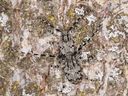
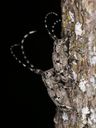
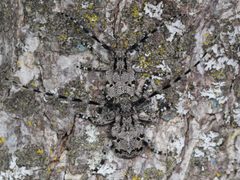
Synaphaeta guexi is a longhorn beetle and the sole in its . It inhabits the Pacific coastal region of North America, from British Columbia to California. The species develops in hardwood trees and is known by the Spotted Tree Borer. It was described by John Lawrence LeConte in 1852.
Pronunciation
How to pronounce Synaphaeta guexi: //sɪ.nəˈfiː.tə ˈɡwɛk.si//
These audio files are automatically generated. While they are not always 100% accurate, they are a good starting point.
Identification
The only in the Synaphaeta, distinguished from related longhorn beetles in tribe Mesosini by its unique generic-level characteristics. Specific diagnostic features for field identification from similar cerambycids are not documented in available sources.
Images
Habitat
Hardwood forests and riparian zones in Pacific coastal regions. Associated with standing or recently dead hardwood trees.
Distribution
Pacific states of North America: British Columbia, Canada south through Washington, Oregon, to California, USA.
Diet
Larvae feed internally in wood of hardwood trees. Documented trees include Pacific willow (Salix lasiandra), white alder (Alnus rhombifolia), coffeeberry (Frangula californica), English walnut (Juglans regia), and cherry (Prunus sp.). diet not documented.
Host Associations
- Salix lasiandra - larval Pacific willow
- Alnus rhombifolia - larval white alder
- Frangula californica - larval coffeeberry
- Juglans regia - larval English walnut
- Prunus - larval cherry
Life Cycle
Complete with wood-boring larval stage. Larvae tunnel in hardwood, likely pupating within the . Specific duration of developmental stages not documented.
Behavior
have been observed active from May through September. Larvae are internal feeders in hardwood trunks and branches.
Ecological Role
Primary decomposer of hardwood trees; contributes to nutrient cycling in forest by breaking down dead and dying wood.
Human Relevance
Minor pest of cultivated English walnut and cherry trees. Otherwise of limited economic significance.
Similar Taxa
- Mesosa speciesFormerly classified in same (Mesosa); now separated based on distinct generic characteristics. Synaphaeta is and geographically restricted to western North America, whereas Mesosa is primarily Palearctic and Oriental in distribution.
More Details
Taxonomic history
Originally described as Mesosa guexii by LeConte in 1852. Subsequently transferred to the Synaphaeta. The spelling 'guexii' in some sources (e.g., NCBI) reflects the original epithet, though current accepted spelling is 'guexi'.
Monotypy
Synaphaeta guexi is the only in its , making the genus and species coextensive in distribution and characteristics.