
Spalacopsis
Newman, 1842
Species Guides
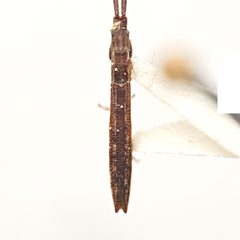
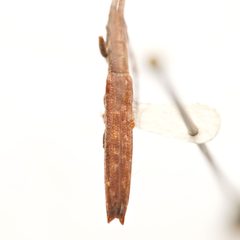
4Spalacopsis is a of longhorn beetles in the Cerambycidae, Agapanthiinae. The genus contains approximately 17 described distributed across the Americas, from the southern United States through Central America to South America. Species were described between 1829 and 1973, with several named by Tyson in the early 1970s. The genus is part of the tribe Agapanthiini, a group of cerambycids often associated with herbaceous vegetation.

Pronunciation
How to pronounce Spalacopsis: /ˌspæləˈkoʊpsɪs/
These audio files are automatically generated. While they are not always 100% accurate, they are a good starting point.
Identification
Members of Spalacopsis can be distinguished from related agapanthiine by their elongated, slender body form and . The genus name refers to the mole-like appearance of some . Specific diagnostic characters require examination of antennal segment proportions, pronotal shape, and elytral sculpturing patterns. Species-level identification relies on detailed examination of body proportions, coloration patterns, and male genitalia.
Images
Distribution
The occurs from the southern United States (Texas, Florida) southward through Mexico, Central America, and into South America. Individual have more restricted ranges; for example, Spalacopsis texana is known from Texas, while Spalacopsis stolata and S. suffusa have broader Neotropical distributions.
Similar Taxa
- AgapanthiaBoth belong to tribe Agapanthiini and share slender body forms, but Agapanthia are primarily Palearctic in distribution and often have distinct color patterns with blue or black metallic hues.
- AgapanthiolaAnother agapanthiine with similar overall , but differs in antennal structure and geographic distribution (primarily European and Mediterranean).
- IschionodontaNeotropical agapanthiine that overlaps in distribution with Spalacopsis; can be distinguished by differences in pronotal and elytral patterns and antennal proportions.
More Details
Taxonomic History
The was established by Edward Newman in 1842 with Spalacopsis stolata as the type . Several species were later transferred into the genus from other genera, including S. filum (originally described in Saperda by Klug, 1829) and S. grandis (originally in Hammaticherus by Chevrolat, 1862). The genus was revised by Tyson in 1970 and 1973, who described several new species and clarified species boundaries.
Etymology
The name Spalacopsis derives from Greek 'spalax' (mole) and 'opsis' (appearance), referring to the somewhat or mole-like appearance of these beetles, possibly due to their compact and mouthparts.