
Astylopsis sexguttata
(Say, 1827)
Six-speckled Long-horned Beetle
Astylopsis sexguttata is a of longhorn beetle in the Lamiinae, first described by Thomas Say in 1827. It is commonly known as the Six-speckled Long-horned . The species is associated with coniferous trees, particularly pines, where larvae bore into dead or dying wood. are active during warmer months and can be found in forested across eastern North America.
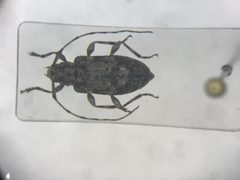
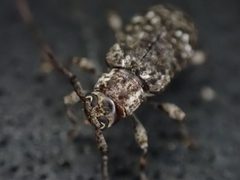
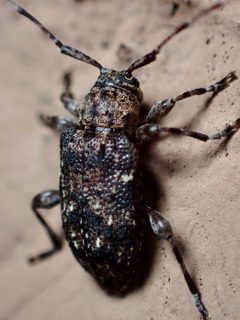
Pronunciation
How to pronounce Astylopsis sexguttata: //æˌstaɪˈlɒpsɪs sɛksˈɡʌtəˌtæ//
These audio files are automatically generated. While they are not always 100% accurate, they are a good starting point.
Images
Habitat
Dry-mesic to mesic forests, particularly in areas with standing dead or dying pine trees (Pinus spp.). Larvae develop within the stems and bark of dead shortleaf pine (Pinus echinata) and likely other conifer .
Distribution
Eastern North America: recorded from Canada (Manitoba, New Brunswick, Nova Scotia, Ontario) and the United States.
Seasonality
observed in fall; larvae present in dead pine stems and under bark during this period. In warmer months, adults likely active during typical season.
Host Associations
- Pinus echinata - larval larvae develop in dead stems and under bark of standing dead trees
Life Cycle
Larvae bore into dead or dying conifer stems, likely completing development within the wood. occurs in -lined . emerge and are found under loose bark of dead pines in preparation for winter.
Behavior
Larvae are wood-borers in dead conifer stems. have been observed under loose bark of standing dead shortleaf pine, suggesting pre-hibernation .
Ecological Role
Decomposer; contributes to breakdown of dead conifer wood in forest .
Similar Taxa
- Cicindela sexguttatasuperficially similar name but belongs to entirely different (Carabidae); a tiger with bright green coloration and glabrous front of , not a longhorn beetle