
Astylopsis
Casey, 1913
Species Guides
5- Astylopsis arcuata
- Astylopsis collaris
- Astylopsis fascipennis
- Astylopsis macula(Spotted Long-horned Beetle)
- Astylopsis sexguttata(Six-speckled Long-horned Beetle)
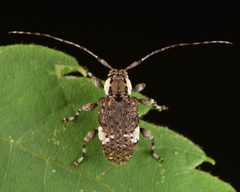
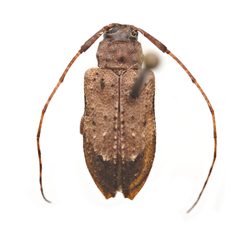
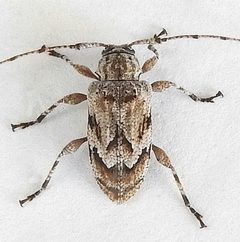
Astylopsis is a of longhorn beetles ( Cerambycidae) in the Lamiinae, tribe Acanthocinini. It was established by Thomas L. Casey in 1913. The genus contains at least five North American , including A. sexguttata, which has been observed developing in dead pine stems. Members are associated with dead or dying coniferous and deciduous wood.
Pronunciation
How to pronounce Astylopsis: /æˈstaɪlɒpsɪs/
These audio files are automatically generated. While they are not always 100% accurate, they are a good starting point.
Identification
Astylopsis can be distinguished from other Acanthocinini by a combination of antennal and pronotal characters, though specific diagnostic features require examination of and detailed morphological analysis. The name refers to the reduced or modified style (astylosis) of certain structures. Species-level identification relies on elytral maculation patterns and body proportions.
Images
Habitat
Associated with dead and dying woody vegetation, particularly conifers. One (A. sexguttata) has been documented in dead shortleaf pine (Pinus echinata) saplings in dry-mesic upland oak-pine forest. Occurs in forested environments where standing or fallen dead wood is present.
Distribution
North America. Documented from the United States, including Missouri and Vermont. Distribution records suggest eastern and central North American range.
Seasonality
Larvae present in dead wood during fall. activity period not well documented but likely coincides with warmer months; larvae observed in preparation for in late fall.
Host Associations
- Pinus echinata - larval dead shortleaf pine saplings
Life Cycle
Larvae develop within dead wood, boring through stems and creating -packed galleries. One observation describes larvae in small dead shortleaf pine saplings, likely in preparation for and . appears to occur as larvae or pupae within wood.
Behavior
Larvae are wood-borers in dead stems. likely seek dead or dying wood for oviposition. or activity patterns typical of the may apply but are not specifically documented.
Ecological Role
Decomposer of dead wood, contributing to nutrient cycling in forest . Larval tunneling accelerates wood decay and creates for other organisms.
Similar Taxa
- AnelaphusBoth are Acanthocinini with larvae in dead wood; Anelaphus includes the twig pruner (A. parallelus), which cuts stems before , a not reported for Astylopsis
- AcanthocinusSimilar size and in dead conifers; requires examination of antennal segment ratios and pronotal for separation
More Details
Taxonomic history
Casey established Astylopsis in 1913, separating it from related based on antennal and genitalic characters. The genus has undergone limited subsequent revision.
Larval identification
Cerambycid larvae are generally difficult to identify to without association or molecular analysis. The observation of Astylopsis sexguttata larvae in pine was inferred from and association rather than definitive larval .