
Tylosis
LeConte, 1850
Species Guides
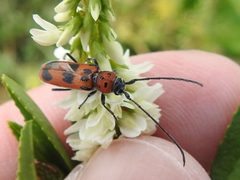
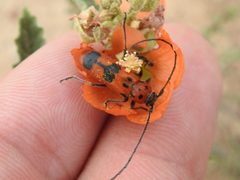
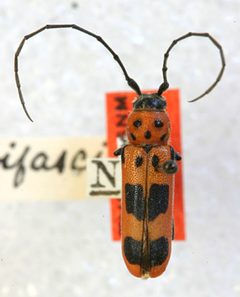
4Tylosis is a of longhorn beetles (Cerambycidae) in the tribe Trachyderini. are characterized by bold red and black coloration, robust bodies, and relatively long . The genus contains species such as Tylosis maculatus and Tylosis jiminezi, which are found in arid and semi-arid regions of western North America. are active during late summer and fall, often associated with flowering plants.
Pronunciation
How to pronounce Tylosis: /tɪˈloʊsɪs/
These audio files are automatically generated. While they are not always 100% accurate, they are a good starting point.
Images
Habitat
Arid and semi-arid regions including desert scrub, grasslands, and oak-juniper woodlands. have been observed on vegetation in sandy areas and along roadsides with abundant flowering plants.
Distribution
Western North America, including the southwestern United States (Arizona, New Mexico, Texas, Colorado, Utah, Nevada, California) and adjacent regions of Mexico.
Seasonality
are active primarily from late July through September, with peak activity in August and early September coinciding with flowering of plants.
Behavior
have been observed resting on foliage and flowers of plants during daylight hours. Some perch openly on vegetation, making them visible to collectors.
Human Relevance
Sought after by collectors for their striking coloration. Mentioned in entomological literature as candidates for "most beautiful longhorn beetle" lists due to their vivid red and black patterning.
Similar Taxa
- CrossidiusBoth belong to tribe Trachyderini and share similar body plans, elongated , and bright red/black or orange/black coloration. Crossidius are also associated with yellow composite flowers and active in late summer/fall, requiring close examination for separation.
- PlinthocoeliumLarge trachyderine cerambycids with metallic or bright coloration that may be superficially similar in size and visual impact, though Plinthocoelium typically exhibits metallic green or blue-green coloration rather than red and black.
More Details
Etymology note
The name Tylosis is shared with unrelated terms in medicine (palmoplantar keratoderma) and botany (a process in tree decay), which can cause confusion in literature searches. The genus was established by LeConte in 1850.
Collecting observations
Tylosis jiminezi has been collected from Sphaeralcea angustifolia (narrowleaf globemallow) in western Texas. Tylosis maculatus has been collected from tall-stemmed malvaceous shrubs and Gutierrezia microcephala in southern Arizona.