
Tylosis maculatus
LeConte, 1850
Spotted Tylosis
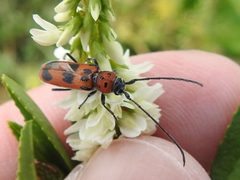
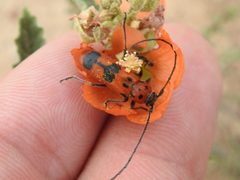
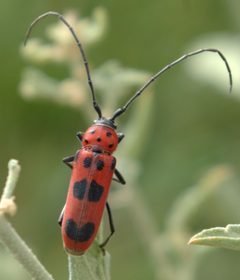
Tylosis maculatus is a of longhorn beetle in the Cerambycidae, described by John Lawrence LeConte in 1850. It belongs to the tribe Trachyderini, a group known for often striking coloration patterns. The species is recognized by its spotted pattern, as indicated by its specific epithet 'maculatus'. It occurs in North and Middle America, with records from the United States and Mexico.
Pronunciation
How to pronounce Tylosis maculatus: /tɪˈloʊsɪs ˌmækjʊˈleɪtəs/
These audio files are automatically generated. While they are not always 100% accurate, they are a good starting point.
Images
Distribution
North America and Middle America. Present in the United States (US) and Mexico (MX) according to GBIF distribution records.
More Details
Taxonomic history
Described by John Lawrence LeConte in 1850. The Tylosis belongs to the Cerambycinae and tribe Trachyderini.
Recognition
Mentioned in coleopterist literature as a candidate for 'most beautiful longhorned beetle' lists due to its coloration, alongside such as Plinthocoelium suaveolens, Crossidius coralinus, Crioprosopus magnificus, Plectrodera scalator, Callona rimosa, and Tragidion species.
Sources and further reading
- BugGuide
- Wikipedia
- GBIF taxonomy match
- iNaturalist taxon
- Catalogue of Life
- Primary Type List | Entomology Research Museum
- Big, black (and red), and beautiful! | Beetles In The Bush
- Belostomatidae | Beetles In The Bush
- Inducing Mosquitoes to Lay Eggs Aids in Insecticide Resistance Testing
- New Analysis Refines Taxonomy of Dermestid Beetles