
Plionoma rubens
(Casey, 1891)
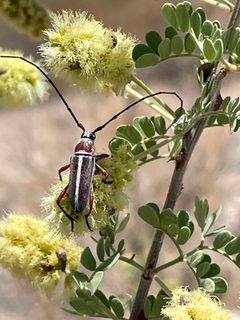
Plionoma rubens is a of longhorned beetle in the Cerambycidae, described by Thomas L. Casey in 1891. It belongs to the tribe Trachyderini, a group known for bright coloration, activity, and attraction to flowers. The species occurs in the southwestern United States and northern Mexico, with records from Texas west to California. Like other members of its , are associated with mesquite and other woody legumes.
Pronunciation
How to pronounce Plionoma rubens: //plaɪˈɒnəmə ˈruːbɛnz//
These audio files are automatically generated. While they are not always 100% accurate, they are a good starting point.
Images
Distribution
Southwestern United States (Texas to California) and northern Mexico. GBIF records confirm presence in Middle America and North America, specifically Mexico (MX) and the United States (US).
Behavior
(day-active), with attracted to flowers. Exhibits bimodal seasonal activity pattern typical of some Trachyderini: adults appear in spring, disappear during summer, and reappear in fall.
Similar Taxa
- Plionoma suturalisCongeneric with overlapping range (both occur from Texas to California and into northern Mexico). P. suturalis has been documented feeding on mesquite flowers and exhibits similar bimodal seasonal activity. The two species can be distinguished by specific coloration and structural differences, though detailed comparative descriptions are lacking in available sources.
Sources and further reading
- BugGuide
- Wikipedia
- GBIF taxonomy match
- iNaturalist taxon
- Catalogue of Life
- Grasshopper Collections and Survey
- Cerambycidae | Beetles In The Bush | Page 10
- Study Finds Very Few Wild Bee Species Pollinate Major Crops
- First collecting trip of the season! | Beetles In The Bush
- May | 2023 | Beetles In The Bush
- Another new record for northwestern Oklahoma | Beetles In The Bush