
Mannophorus laetus
LeConte, 1854
Pleasant Aster Bycid
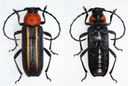
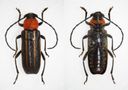
Mannophorus laetus is a of longhorned beetle in the Cerambycidae, described by John Lawrence LeConte in 1854. It belongs to the tribe Trachyderini, a group known for often bright coloration and association with flowers. The species is found in North America, particularly the southwestern United States and Mexico. are frequently observed on flowers of Asteraceae, where they feed on pollen and nectar.

Pronunciation
How to pronounce Mannophorus laetus: /mænˈnoʊfərəs ˈliːtəs/
These audio files are automatically generated. While they are not always 100% accurate, they are a good starting point.
Images
Distribution
Southwestern United States and Mexico. Records indicate presence in Arizona and California, with broader distribution across Middle America and North America.
Seasonality
have been observed in late summer and early autumn, with records from September in Arizona. Activity likely corresponds with blooming periods of flowers.
Behavior
are known to visit flowers, particularly composites (Asteraceae), where they feed on pollen and nectar.
Similar Taxa
- Mannophorus forreriCongeneric with similar bright orange coloration and black markings, also found on flowers of Gutierrezia and Heterotheca in Arizona. M. forreri has black elytral apices and pronotal spots, while M. laetus has different patterning.