
Mannophorus
LeConte, 1854
Species Guides
2- Mannophorus forreri
- Mannophorus laetus(Pleasant Aster Bycid)
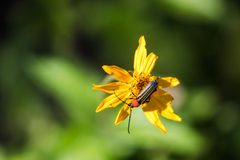
Mannophorus is a of longhorn beetles (Cerambycidae) in the tribe Trachyderini, established by LeConte in 1854. The genus contains at least two recognized : Mannophorus forreri (Bates, 1885) and Mannophorus laetus (LeConte, 1854). Members of this genus are rarely encountered in the field. Mannophorus forreri has been documented from Arizona, where it was found on flowers of Gutierrezia microcephala and Heterotheca fulcrata.
Pronunciation
How to pronounce Mannophorus: //mænˈnɒfərəs//
These audio files are automatically generated. While they are not always 100% accurate, they are a good starting point.
Identification
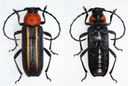
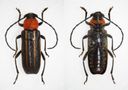
Mannophorus are characterized by their relatively large size within the Trachyderini, with Mannophorus forreri displaying a distinctive orange coloration with black elytral apices and pronotal spots. The body form is cylindrical and robust. Males and females can be distinguished by antennal length, with males possessing longer . The can be distinguished from similar trachyderine genera by its combination of color pattern and body proportions.
Images
Habitat
Based on collection records for M. forreri, in this appear to be associated with dry, open in mountainous regions of the southwestern United States. Specimens have been found on flowers of yellow composites (Asteraceae) including Gutierrezia microcephala and Heterotheca fulcrata, suggesting a preference for areas where these plants bloom.
Distribution
The is known from the southwestern United States and Mexico. Mannophorus forreri has been recorded from Arizona (Kitt Peak area, Santa Rita Mountains). Mannophorus laetus was described from the United States, though specific locality details for this are not provided in available sources.
Seasonality
have been observed in early September in Arizona, suggesting late summer to early autumn activity. The timing appears to coincide with the blooming period of yellow composite flowers that serve as adult food sources.
Behavior
have been observed visiting flowers of yellow composites (Asteraceae), where they presumably feed on pollen and nectar. When disturbed, individuals may take in a spiraling pattern. The beetles appear to be and are not readily attracted to artificial light sources.
Similar Taxa
- CrossidiusBoth belong to the tribe Trachyderini and share similar body forms and flower-visiting . Mannophorus is larger and more robust with distinctive orange and black coloration, whereas Crossidius are generally smaller with more variable color patterns and strongly sexually dimorphic antennal lengths.
- DeltaspisAnother trachyderine that shares the robust body form and association with flowering plants. Deltaspis differ in coloration and pronotal structure.
More Details
Taxonomic history
The was established by John Lawrence LeConte in 1854 with the description of Mannophorus laetus. The second , M. forreri, was described by Henry Walter Bates in 1885. The genus has remained small and stable taxonomically, with no additional species described in recent decades.
Rarity in collections
Mannophorus forreri is considered a very uncommonly encountered among North American cerambycids. A 2019 collecting trip report documented only five individuals found after intensive searching, suggesting genuine rarity rather than simply cryptic habits.