
Aethecerinus latecinctus
(Horn, 1880)
Aethecerinus latecinctus is a of longhorned beetle in the Cerambycidae, tribe Trachyderini, described by George Henry Horn in 1880. The species is distributed across the southwestern United States and northern Mexico. have been collected primarily from mesquite (Prosopis glandulosa) flowers and foliage, where they feed and mate. The species is and appears to exhibit seasonal activity patterns typical of many southwestern cerambycids.
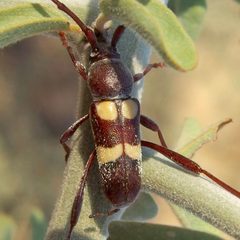
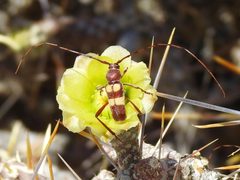
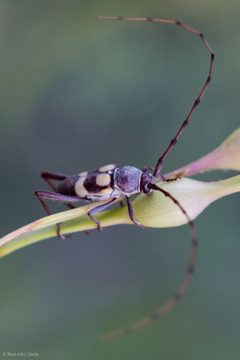
Pronunciation
How to pronounce Aethecerinus latecinctus: /ˌiːθɛˈseɪrənəs ˌleɪtɛˈsɪŋktəs/
These audio files are automatically generated. While they are not always 100% accurate, they are a good starting point.
Images
Habitat
Associated with mesquite-dominated including mesquite/saltbush chaparral and riparian areas. have been collected from Prosopis glandulosa (honey mesquite) in rocky gypsum/red siltstone hillside environments and sand dune habitats with mesquite/oak chaparral.
Distribution
Southwestern United States (Texas, New Mexico, Oklahoma, Arizona) and northern Mexico (MX). Records include western Oklahoma (Gloss Mountains), eastern New Mexico (Bottomless Lakes State Park, Mescalero Sands), west Texas (Van Horn, Hudspeth County; San Felipe Park, El Paso County), and southeastern Arizona.
Seasonality
have been observed in May, June, and July. One record notes abundance on blooming mesquite in early July in Arizona. The likely follows the typical Trachyderini pattern of spring-summer activity coinciding with mesquite flowering.
Diet
feed on mesquite (Prosopis glandulosa) flowers. Larval unknown but presumably develops in dead mesquite wood or roots based on tribal characteristics.
Host Associations
- Prosopis glandulosa - feeding/oviposition site collected feeding on flowers; primary recorded
Behavior
. are active on plant foliage and flowers during daylight hours. Multiple individuals may be found on a single host plant, with some flying in while others feed.
Similar Taxa
- Plionoma suturalisSympatric on Prosopis glandulosa flowers; both are Trachyderini with similar size and flower-visiting , but P. suturalis has distinctive color pattern with red/orange markings on black background while A. latecinctus has different coloration
- Batyle suturalisAlso found on mesquite flowers in same , but smaller and with different elytral pattern