
Oeme rigida
(Say, 1826)
Rigid Oeme
Species Guides
1Oeme rigida is a longhorn beetle (Cerambycidae) described by Thomas Say in 1826. The is native to western North America, with records from the United States and Mexico. Two are recognized: O. r. rigida (nominate) and O. r. deserta Casey, 1924. have been collected from dead pinyon pine (Pinus edulis) branches, suggesting larval development in coniferous wood.
Pronunciation
How to pronounce Oeme rigida: /ˈiː.me ˈriː.ɡi.da/
These audio files are automatically generated. While they are not always 100% accurate, they are a good starting point.
Identification
Distinguished from related Oeme by geographic distribution and associations. O. r. deserta occurs in more arid regions (deserta = desert). Separation from other Oemini requires examination of antennal proportions, elytral sculpturing, and male genitalia. The species can be confused with other medium-sized cerambycines in the Oemini tribe; definitive identification relies on detailed morphological study or geographic context.
Images
Appearance
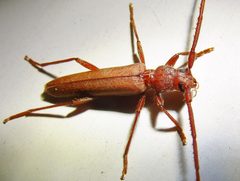
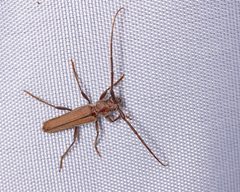
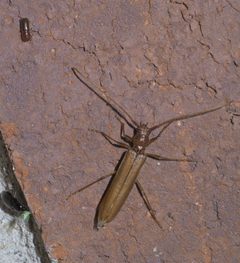
are elongate, cylindrical longhorn beetles typical of the Oeme. The body is moderately robust with that are notably long—characteristic of the Cerambycidae. Specific coloration details are not well documented in available sources, but the likely exhibits the brown to blackish tones common in the genus. The nominate and O. r. deserta may differ in size, coloration, or geographic distribution.
Habitat
Pinyon-juniper-oak woodlands and associated coniferous forests. have been specifically recorded from dead Colorado pinyon pine (Pinus edulis) branches. The is characterized by sandstone escarpments, rocky slopes, and open woodlands at moderate elevations in the southwestern United States and adjacent Mexico.
Distribution
United States (primarily southwestern states including Oklahoma, Texas, New Mexico, Arizona) and Mexico. The O. r. deserta occurs in more arid regions, while the nominate subspecies has broader distribution.
Seasonality
have been collected in late spring to early summer (May–June). Specific is poorly documented, but activity likely coincides with warm temperatures and availability of suitable material.
Host Associations
- Pinus edulis - larval Collected from dead branches; larval galleries present in wood
Behavior
are or , as evidenced by collection at night on tree trunks and branches. They are attracted to recently dead or stressed coniferous wood, where mating and oviposition presumably occur. The exhibits typical cerambycid of seeking woody for larval development.
Ecological Role
As a wood-boring , larvae contribute to decomposition of dead coniferous wood, facilitating nutrient cycling in pinyon-juniper woodland . The is part of the diverse of saproxylic insects associated with Pinus edulis in southwestern North America.
Similar Taxa
- Oeme costataCongeneric with similar and ; occurs on pinyon pine in the same region (e.g., Kyle Canyon, Nevada). Distinguished by specific elytral costation and geographic range.
- Haplidus testaceusCollected from same (dead Pinus edulis) and ; smaller size and different antennal proportions distinguish it from O. rigida.
- Semanotus juniperiAnother cerambycid associated with conifers in the same region; larger size, different preference (juniper), and distinct .
More Details
Subspecies
Oeme rigida deserta Casey, 1924 is recognized as a distinct , described from more arid regions. It was recorded as a new state record for Oklahoma in 2024, collected from dead Pinus edulis branches in Cimarron County.
Taxonomic History
Originally described as Elaphidion rigidum by Thomas Say in 1826, later transferred to the Oeme. The basionym Elaphidion rigidum remains in synonymy.
Collection Notes
Recent fieldwork (2024) documented the from sandstone escarpment in the Oklahoma panhandle, beating dead branches of Colorado pinyon pine. This represents an unusually eastern occurrence for the species and .