
Psyrassa
Pascoe, 1866
Species Guides
4- Psyrassa brevicornis
- Psyrassa castanea
- Psyrassa pertenuis
- Psyrassa unicolor(Branch Pruner Beetle)
Psyrassa is a of longhorn beetles (Cerambycidae) in the tribe Elaphidiini. in this genus are small to medium-sized cerambycids with elongated bodies. The genus was established by Francis Pascoe in 1866 and is distributed in the Americas. Members are attracted to fermented traps, suggesting feeding on sugary or fermenting substances.
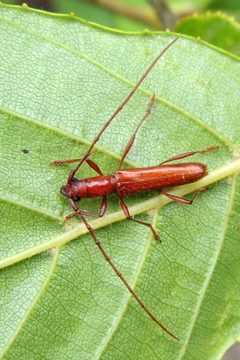
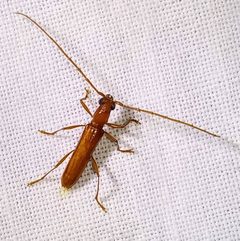
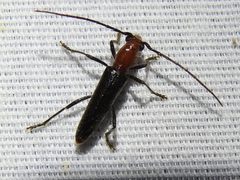
Pronunciation
How to pronounce Psyrassa: /saɪˈræsə/
These audio files are automatically generated. While they are not always 100% accurate, they are a good starting point.
Images
Habitat
Associated with coniferous and mixed woodlands, particularly pine-oak and pinyon-juniper . Has been collected in sand dune-adjacent woodlands and alpine coniferous forests.
Distribution
Recorded from the southwestern United States (Arizona, Colorado, Nevada, New Mexico, Oklahoma, Utah, Vermont) and Colombia. The appears to have a disjunct distribution with most records from western North America and some from northern South America.
Seasonality
have been collected in September in the southwestern United States, suggesting late-season activity.
Behavior
are attracted to sweet red wine-baited jug traps (SRW-baited traps), indicating or activity and feeding on fermenting substances.
Similar Taxa
- ElaphidionBoth are small elaphidiine cerambycids with similar body forms; separation requires examination of antennal and elytral characters
- AnelaphusSimilar size and general appearance; Psyrassa often have more slender bodies and different antennal proportions
More Details
Collecting notes
In southwestern Utah, multiple Psyrassa were captured together in a single SRW-baited jug trap set in sand dune-adjacent Ponderosa pine woodland, indicating trap effectiveness for sampling this