
Elaphidion irroratum
(Linnaeus, 1767)
Elaphidion irroratum is a of longhorned beetle in the Cerambycidae, originally described by Carl Linnaeus in 1767. It is one of the earliest described cerambycid species in North American entomological literature. The species is characterized by distinctive coloration and antennal structure typical of the Elaphidion. It occurs across parts of North America, the Caribbean, and Middle America.
Pronunciation
How to pronounce Elaphidion irroratum: /ɛˌlæfɪˈdaɪən ɪroʊˈreɪtəm/
These audio files are automatically generated. While they are not always 100% accurate, they are a good starting point.
Identification
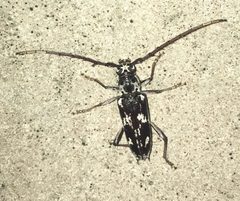
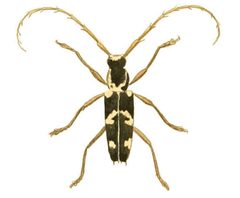
Distinguished from related Elaphidion by the combination of: spineless with white lateral patches; with spines on all joints except the basal; with two terminal spines each; and the specific pattern of whitish marginal patches on dark elytra. The cream-dappled front of the and reddish brown legs with spined and tibiae are additional diagnostic features.
Images
Appearance
Body length approximately 19 mm. very dark brown to almost black, with front dappled with cream color. dark brown, approximately body length, with spines at each joint except the basal joint adjacent to the head. spineless, brownish black, with white patches on sides and finely punctured surface visible under magnification. Scutellum very small, nearly triangular. brownish black, margined at sides and with whitish patches, punctured, each with two spines at the extremity. and breast black, covered with short grey pile-like hairs. Legs reddish brown; (except fore pair) with small spine at tip, tibiae with spine at tips.
Distribution
Recorded from North America, Caribbean, and Middle America. Present in the Antilles (AW). Specific locality details within these broad regions are not well documented in available sources.
Sources and further reading
- BugGuide
- Wikipedia
- GBIF taxonomy match
- iNaturalist taxon
- Catalogue of Life
- Observation and Bias in Biology | Beetles In The Bush
- Hitchin’ A Ride | Beetles In The Bush
- Nomenclatural changes in Phymatodes | Beetles In The Bush
- Beetle Collecting 101: Fermenting bait traps for collecting longhorned beetles | Beetles In The Bush
- Friday Flower – Pawpaw | Beetles In The Bush