
Aneflus
LeConte, 1873
Species Guides
7Aneflus is a of longhorn beetles (Cerambycidae) established by LeConte in 1873. The genus comprises approximately 25 described distributed primarily in western North America, with concentrations in the southwestern United States and adjacent Mexico. Species are associated with woody vegetation, particularly oaks and desert shrubs. The genus belongs to the tribe Elaphidiini, a diverse group of cerambycine beetles often characterized by relatively small to medium size and cryptic habits.
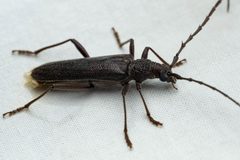
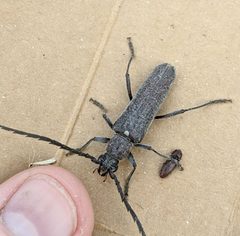
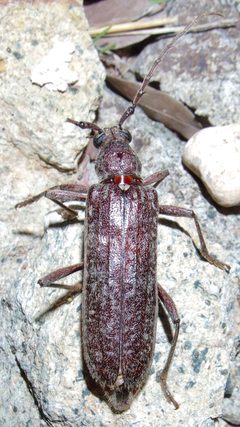
Identification
Aneflus are small to medium-sized cerambycids with elongated, somewhat cylindrical bodies. Members of the typically exhibit relatively short compared to many cerambycines, usually not exceeding body length. The pronotum is generally unarmed or with weak lateral . Species-level identification requires examination of antennal structure, pronotal sculpturing, and elytral maculation patterns. The genus is distinguished from similar elaphidiines by combinations of antennal segment proportions, emargination, and male genitalic characters.
Images
Habitat
of Aneflus inhabit arid and semi-arid environments including desert scrub, oak woodlands, and montane forests. Specific documented include Baccharis sarothroides (desert broom) stands in Arizona, oak-dominated canyons in the Chiricahua and Santa Rita mountains, and mesquite-acacia associations in desert flats.
Distribution
Western North America, primarily the southwestern United States (Arizona, New Mexico, Texas, Oklahoma, California) and adjacent northern Mexico. Specific collection records include: Arizona (Chiricahua Mountains, Santa Rita Mountains, Huachuca Mountains, Madera Canyon, Montosa Canyon, Box Canyon, Portal area, Tombstone vicinity, Naco vicinity, Continental vicinity); Oklahoma (Wichita Mountains); and presumably other states within the documented range of constituent .
Host Associations
- Baccharis sarothroides - resting/feeding sitedocumented in Arizona; beetles observed resting on foliage
- Quercus emoryi - breeding/feeding siteEmory oak in Arizona mountain canyons
- Quercus arizonica - breeding/feeding siteArizona oak in southwestern mountain ranges
- Mimosa dysocarpa - associated vegetationvelvetpod mimosa in desert canyon
- Acacia rigidula - associated vegetationsweet acacia in desert thorn-scrub
- Prosopis glandulosa - associated vegetationmesquite in desert flats and washes
Behavior
have been observed resting on foliage of shrubs during daylight hours. Activity patterns suggest or movement, with individuals occasionally attracted to ultraviolet light sources. The exhibits typical cerambycid of remaining motionless when disturbed, relying on cryptic coloration for avoidance.
Similar Taxa
- StenosphenusBoth are small to medium elaphidiines with somewhat similar body proportions; Stenosphenus typically exhibits more pronounced pronotal and different antennal scaling
- ElaphidionLarger elaphidiine with overlapping distribution; Elaphidion generally have longer and more robust pronotal armature
- AnopliomorphaSimilar size and general habitus; distinguished by antennal structure and male genitalic characters