
Aneflomorpha seminuda
Casey, 1912
Aneflomorpha seminuda is a of longhorn beetle ( Cerambycidae) in the tribe Elaphidiini. It was described by Thomas L. Casey in 1912 and occurs in North America. The species is part of a of small to medium-sized cerambycids commonly associated with woody vegetation. Specific biological details remain poorly documented in published literature.
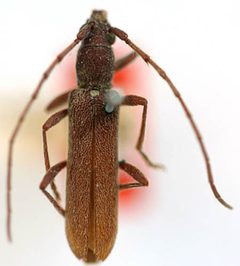
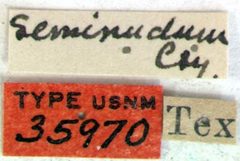
Pronunciation
How to pronounce Aneflomorpha seminuda: //ænəfloʊˈmɔrfə sɛmɪˈnjuːdə//
These audio files are automatically generated. While they are not always 100% accurate, they are a good starting point.
Identification
Members of Aneflomorpha can be distinguished from similar elaphidiine by their relatively slender body form and that are typically shorter than the body. Within the genus, A. seminuda would require examination of specific morphological characters such as elytral patterns, pronotal shape, and male genitalia for definitive identification. The specific epithet "seminuda" (half-naked) likely refers to reduced or patchy elytral pubescence compared to .
Images
Habitat
Based on collection records for the in the southwestern United States, Aneflomorpha are typically found in arid and semi-arid scrublands, oak woodlands, and riparian corridors. The type locality and specific associations for A. seminuda have not been explicitly detailed in accessible literature.
Distribution
North America; recorded from the United States. The precise range within the U.S. is not well documented, though related occur in the southwestern states including Arizona, New Mexico, and Texas.
Seasonality
activity period is not explicitly documented. Related Aneflomorpha in the southwestern U.S. have been collected from late spring through summer (May–August), with some records into early fall.
Life Cycle
As with other cerambycids, development presumably occurs in dead or dying woody plant material, with larvae feeding in phloem and xylem tissues. Specific plants for A. seminuda are not documented.
Behavior
are likely or and have been observed to come to artificial light sources. This is inferred from field observations of and related elaphidiine .
Ecological Role
As a wood-boring , larvae likely contribute to decomposition of dead woody material and nutrient cycling in their . may serve as prey for and participate in pollination to a limited degree while feeding on floral resources.
Human Relevance
No documented economic importance. Not known to be a pest of living trees or timber products. Of interest primarily to coleopterists studying North American Cerambycidae diversity.
Similar Taxa
- Aneflomorpha tibialisSimilar size and general appearance; distinguished by differences in leg coloration and tibial
- Aneflomorpha puberaOverlapping distribution; A. pubera typically has more extensive elytral , which may contrast with the reduced pubescence implied by A. seminuda's specific epithet
- Elaphidion mucronatumSympatric elaphidiine with similar body form; distinguished by different antennal proportions and elytral apex shape
More Details
Taxonomic History
Described by Thomas L. Casey in 1912 as part of his extensive work on North American Coleoptera. The original description appeared in Casey's 'Memoirs on the Coleoptera' series. No subsequent taxonomic revisions or redescriptions are readily accessible in the literature.
Field Collection
Based on observations of in the southwestern U.S., beating dead branches of oaks (Quercus spp.), mesquite (Prosopis spp.), and other woody legumes may be productive for finding . Blacklighting in appropriate during summer months is also recommended.