
Xylotrechus obliteratus
LeConte, 1873
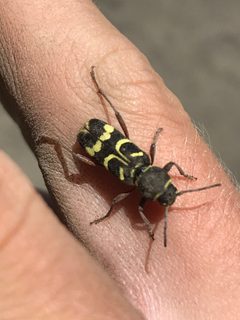
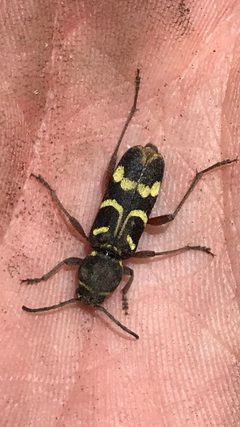
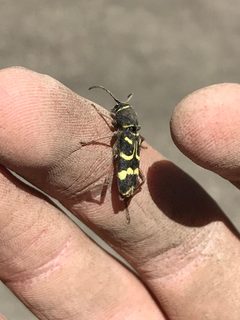
Xylotrechus obliteratus is a longhorned beetle in the Cerambycidae, described by John Lawrence LeConte in 1873. It belongs to the tribe Clytini, a group of wood-boring beetles often characterized by patterned or banded . The name 'obliteratus' (meaning 'obliterated' or 'erased') likely refers to reduced or indistinct markings compared to . Like other members of the Xylotrechus, this species is associated with woody plants, though specific records are limited in the available literature.
Pronunciation
How to pronounce Xylotrechus obliteratus: //zaɪloʊˈtrɛkəs ɒˌblɪtəˈreɪtəs//
These audio files are automatically generated. While they are not always 100% accurate, they are a good starting point.
Identification
Xylotrechus obliteratus can be distinguished from other Xylotrechus by its relatively indistinct or 'obliterated' elytral markings, in contrast to the bold, contrasting patterns seen in species such as X. colonus (which has distinct pale bands on dark background) or X. sagittarius (with arrow-shaped markings). Within the Clytini, separation from related such as Plagionotus and Clytus requires examination of antennal structure, pronotal shape, and genitalia. Positive identification typically requires reference to original description or .
Images
Appearance
As a member of the Clytini tribe, Xylotrechus obliteratus likely exhibits the typical form of the : elongate body with parallel-sided , moderate-length (shorter than body in females, often exceeding body length in males), and variable elytral coloration ranging from gray to brown with variable dark markings. The specific epithet suggests markings may be reduced or indistinct compared to boldly patterned such as X. colonus. Size is moderate for the genus, likely 10–15 mm in length. Detailed morphological descriptions are not available in the cited sources.
Habitat
Specific associations are not documented in available sources. Based on -level patterns, Xylotrechus typically inhabit deciduous woodlands and forest edges where their trees occur. are often found on or near host trees, particularly on sun-exposed trunks and branches.
Distribution
Distribution records from GBIF indicate presence in North America, specifically Canada (CA) and the United States (US). The was described by LeConte, who worked primarily in North American fauna, suggesting a Nearctic distribution. Specific provincial or state records are not detailed in available sources.
Ecological Role
As a member of the Cerambycidae, Xylotrechus obliteratus likely functions as a primary decomposer of dead and dying woody material. Larvae (wood-borers) tunnel in phloem and outer sapwood of trees, contributing to nutrient cycling and creating for secondary cavity-nesting organisms. Specific ecological impacts are not documented.
Similar Taxa
- Xylotrechus colonusSimilar size and general form, but X. colonus has distinct pale transverse bands on dark , whereas X. obliteratus has reduced or indistinct markings as implied by its specific epithet. X. colonus is frequently collected in ethanol-baited traps in Missouri glade .
- Xylotrechus sagittariusAnother congeneric longhorn with bold arrow-shaped (sagittate) elytral markings; X. obliteratus lacks such conspicuous pattern elements.
- Plagionotus arcuatusMember of same tribe (Clytini) with yellow-and-black banded mimicking vespid ; distinguished from X. obliteratus by more robust form, different antennal structure, and bold aposematic coloration.
More Details
Taxonomic History
Described by John Lawrence LeConte in 1873, a prolific American entomologist who described thousands of North American . The species has remained in the Xylotrechus without subgeneric placement changes, though the tribe Clytini has undergone periodic revision.
Data Limitations
This is notably data-deficient in publicly available sources. Only 2 observations are recorded in iNaturalist, and it is not mentioned in the extensive field blog 'Beetles In The Bush' despite coverage of numerous and related cerambycids. This rarity in collections and observations may reflect genuine rarity, cryptic habits, or undercollection due to nondescript appearance.