
Xylotrechus insignis
LeConte, 1873
Willow Borer
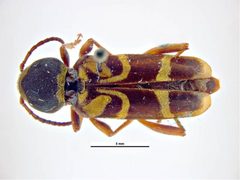
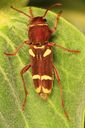
Xylotrechus insignis is a of longhorn beetle in the Cerambycidae, described by John Lawrence LeConte in 1873. Commonly known as the Willow Borer, this is recognized for its wood-boring larvae that tunnel into willow trees and related , potentially causing significant damage or tree mortality. measure 12–16 mm in length. The species is native to North America, with records from the United States and Mexico.
Pronunciation
How to pronounce Xylotrechus insignis: /zaɪˈlɒtrɛkəs ɪnˈsɪɡnɪs/
These audio files are automatically generated. While they are not always 100% accurate, they are a good starting point.
Identification
The can be distinguished from other Xylotrechus by its association with willow and its specific morphological features consistent with the , including antennal structure and body proportions. Accurate identification to species level requires examination of genitalic characters or detailed comparison with , as external among can be similar. It is distinguished from other willow-associated cerambycids by its smaller size (12–16 mm) and the specific combination of characters described by LeConte (1873).
Images
Habitat
Associated with riparian and wetland environments where willow trees (Salix spp.) occur. Larvae develop within the wood of living or stressed willow trees and possibly related plants in the Salicaceae.
Distribution
Native to North America. Documented from the United States and Mexico (Middle America). GBIF records indicate presence in both countries, though specific state or provincial distributions are not detailed in available sources.
Diet
Larvae bore into and feed on the wood of willow trees (Salix spp.), tunneling through sapwood and heartwood. This feeding activity can weaken or kill trees. feeding habits are not documented in available sources.
Host Associations
- Salix - larval Primary ; 'Willow Borer' derives from this association
Life Cycle
Complete with , larval, pupal, and stages. Larvae are wood-borers that tunnel into willow trunks and branches. Developmental timing and number of per year are not documented in available sources.
Behavior
Larvae exhibit wood-boring , creating tunnels within willow trees that may girdle branches or trunks, leading to tree stress or mortality. are likely active during warmer months, though specific activity patterns are not documented.
Ecological Role
As a primary wood-borer in willows, the contributes to nutrient cycling through wood decomposition and creates for secondary cavity users. In high densities, it functions as a pest by causing tree mortality. It may also serve as prey for woodpeckers and other .
Human Relevance
Considered a pest of willow trees due to larval boring activity that can kill or damage ornamental and native willows. The 'Willow Borer' directly references its economic and ecological impact. No specific management protocols or economic damage assessments are documented in available sources.
Similar Taxa
- Xylotrechus colonusAnother North American Xylotrechus with similar size and preferences; distinguished by specific morphological details of elytral patterning and genitalia
- Other Clytini genera (e.g., Clytus, Plagionotus)Similar antennal structure and body form; distinguished by associations and detailed examination of elytral and color patterns
More Details
Taxonomic History
Described by John Lawrence LeConte in 1873, a prominent American entomologist who described numerous North American .
Collection Records
iNaturalist reports 171 observations of this , indicating it is moderately well-documented by citizen scientists, though expert verification of these records is not assessed here.