
Calloides nobilis
(Harris, 1837)
Species Guides
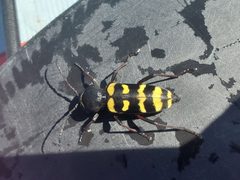
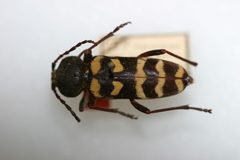
2Calloides nobilis is a longhorn beetle in the Cerambycidae, first described by Harris in 1837. The species is known to occur in North America, with records from the United States and Canada. A , Calloides nobilis mormonus, has been documented from fire-affected areas of the Kaibab Plateau in Arizona. The species is attracted to sweet red wine-baited traps, suggesting feeding involving fermenting substrates.
Pronunciation
How to pronounce Calloides nobilis: /kæˈlɔɪdiːz ˈnɒbɪlɪs/
These audio files are automatically generated. While they are not always 100% accurate, they are a good starting point.
Identification
As a member of tribe Clytini, Calloides nobilis likely exhibits the characteristic banded or patterned typical of this group, though specific diagnostic features are not documented in available sources. The C. nobilis mormonus can be distinguished from the nominate subspecies by geographic distribution and potentially subtle morphological differences, though these are not specified in available literature.
Images
Habitat
Documented from coniferous forest , specifically areas with Pinus ponderosa (Ponderosa pine) and fire-affected woodlands. The mormonus has been collected in recently burned pinyon-juniper woodland on the Kaibab Plateau, suggesting association with post-fire successional habitats.
Distribution
North America. Documented from the United States (including Arizona, Missouri) and Canada. The nominate has been reared from fire-damaged oak in Missouri; the subspecies mormonus occurs in northern Arizona.
Seasonality
activity has been documented in September. Collection records from the Kaibab Plateau in early September suggest late-season , possibly associated with post-fire conditions.
Host Associations
- Quercus - larval nominate reared from fire-damaged oak
Life Cycle
Larval development occurs in dead or fire-damaged wood. The has been successfully reared from collected wood with holes, indicating a typical cerambycid involving wood-boring larvae and emergence of through prepared exit holes.
Behavior
are attracted to sweet red wine-baited jug traps, indicating activity and probable feeding on fermenting plant exudates or similar substrates. This is consistent with many cerambycine beetles.
Ecological Role
As a wood-boring , larvae contribute to decomposition of dead and fire-damaged hardwoods. The appears particularly associated with post-fire , potentially playing a role in early successional wood decomposition.
Human Relevance
Of interest to coleopterists and collectors due to its relative rarity and association with fire-affected . The has been documented in entomological collecting trip reports focusing on cerambycid diversity in western North America.
Similar Taxa
- Other ClytiniBanded elytral patterns and general body form shared with related in tribe Clytini; precise differentiation requires examination of antennal structure, pronotal shape, and genitalia
More Details
Subspecies
Two recognized: Calloides nobilis nobilis (nominate form) and C. nobilis mormonus. The latter was the only longhorn beetle captured in a sweet red wine-baited jug trap in fire-affected Kaibab National Forest, Arizona, in September 2024, despite the trap containing numerous other insects.
Fire association
Both documented occurrences of this involve fire-affected : the nominate from fire-damaged oak in Missouri, and mormonus from recently burned pinyon-juniper woodland in Arizona. This pattern suggests a strong ecological association with post-fire environments, though whether this represents true pyrophily or opportunistic use of temporarily abundant dead wood resources remains to be determined.