
Semanotus litigiosus
(Casey, 1891)
Firtree Borer
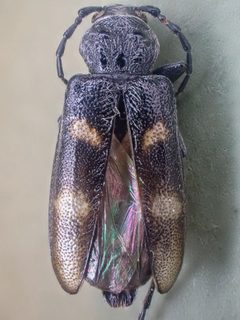
Semanotus litigiosus is a longhorn beetle (Cerambycidae) known as the firtree borer, found in the coniferous forest belt of North America. The is a wood-boring pest of white fir (Abies concolor), with larvae causing significant damage to windthrown timber by excavating galleries in the phloem and boring deep into the sapwood to construct pupal chambers. emerge in spring and lay in bark crevices, with a spanning approximately one year.
Pronunciation
How to pronounce Semanotus litigiosus: /ˌsɛm.əˈnoʊ.təs ˌlɪt.ɪˈdʒoʊ.səs/
These audio files are automatically generated. While they are not always 100% accurate, they are a good starting point.
Images
Habitat
Coniferous forest belt of North America, specifically associated with white fir (Abies concolor) stands. The exploits windthrown or stressed trees.
Distribution
North America; recorded from British Columbia, California, and Honduras based on distribution records.
Seasonality
emerge in March or April; active in early spring for oviposition. Larval development occurs through midsummer, with in fall.
Diet
Larvae feed on the phloem and sapwood of white fir (Abies concolor), excavating winding galleries that deeply etch the sapwood.
Host Associations
- Abies concolor - primary white fir; larvae develop in phloem and sapwood of windthrown or stressed trees
Life Cycle
are laid in bark crevices in early spring with an of 10–30 days depending on temperature. Larvae excavate winding galleries in the phloem, deeply etching the sapwood, until midsummer when they enter the sapwood and bore up to 3 inches into the wood to construct pupal chambers. lasts 2–4 weeks in fall; form by September and overwinter in the pupal chambers. Adults emerge the following March or April.
Behavior
attack trees in early spring, selecting bark crevices for deposition. Larvae construct deep pupal chambers in the sapwood, with adults remaining in these chambers through winter.
Ecological Role
The contributes to degradation of windthrown white fir timber, reducing lumber quality. are regulated by material availability and natural enemy pressure from woodpeckers, an ostomid , and a braconid .
Human Relevance
Economic pest of white fir timber; larvae cause serious degrade in lumber manufactured from windthrown trees by boring deep into wood and creating defects.
Similar Taxa
- Semanotus juniperiBoth are rare, large-bodied Semanotus that bore in the main limbs of conifers; S. juniperi infests Utah juniper (Juniperus osteosperma) rather than fir
- Semanotus amethystinusSimilar (Amethyst Cedar Borer) and , but associated with cedar rather than fir
More Details
Natural enemies
Three principal natural enemies documented: woodpeckers (), an ostomid (predator), and a braconid (). These natural enemies contribute to .