
Elatotrypes hoferi
Fisher, 1919
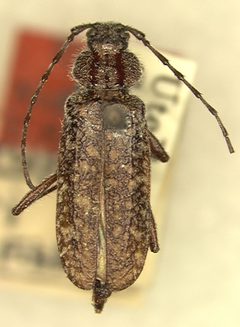
Elatotrypes hoferi is a of longhorn beetle in the Cerambycidae, described by Fisher in 1919. It belongs to the tribe Callidiini within the Cerambycinae. The species is known from western Canada, with records from Alberta and British Columbia. Very few observations exist in public databases, suggesting it is either rare, cryptic, or undercollected.
Pronunciation
How to pronounce Elatotrypes hoferi: /ɛˌlætoʊˈtraɪpiːz ˈhoʊfəraɪ/
These audio files are automatically generated. While they are not always 100% accurate, they are a good starting point.
Identification
Members of the Elatotrypes are small to medium-sized cerambycines with compact bodies and relatively short compared to many longhorn beetles. Within Callidiini, Elatotrypes can be distinguished from related genera such as Callidium and Phymatodes by subtle differences in antennal structure, pronotal shape, and elytral . Specific diagnostic features for E. hoferi remain undocumented in accessible literature.
Images
Distribution
Recorded from Alberta and British Columbia, Canada. Distribution records suggest a western North American range, though precise limits are poorly documented due to limited collection effort.
Similar Taxa
- Elatotrypes aequalisCongeneric with similar overall ; distinguished by subtle differences in size, coloration, and male genitalia, though these require expert examination.
- Callidium speciesRelated in the same tribe (Callidiini) with similar compact body form; Callidium often have more strongly sculptured and different antennal proportions.
- Phymatodes speciesRelated callidiine with overlapping size range; Phymatodes typically shows more variable color patterns and different pronotal contours.
More Details
Taxonomic Note
Elatotrypes is a small within the diverse tribe Callidiini. The genus was established to accommodate with particular combinations of antennal and genitalic characters that separate them from the historically broader concept of Callidium. The specific epithet 'hoferi' likely honors an individual, though the namesake has not been definitively identified in available literature.
Data Deficiency
This is represented by only a single observation in iNaturalist and appears infrequently in museum collections. This data deficiency limits ecological and biological understanding. Targeted survey work in coniferous forests of the Canadian Rockies may yield additional specimens and clarify associations.