
Macrelmis
Motschulsky, 1859
Species Guides
4Macrelmis is a of riffle beetles in the Elmidae, first described by Motschulsky in 1859. The genus contains at least three described in North America (M. moesta, M. shoemakei, M. texana) and additional species in South America, including three newly described from southeastern Brazil. Species are organized into ten defined species groups based on morphological characteristics. Larval stages have been described for some species, including M. aequalis from Argentina and M. isis.
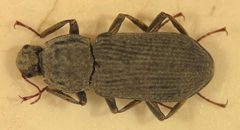
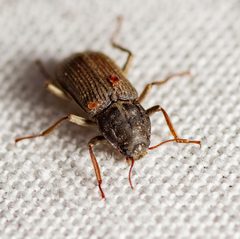
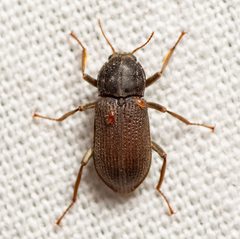
Pronunciation
How to pronounce Macrelmis: //məˈkrɛl.mɪs//
These audio files are automatically generated. While they are not always 100% accurate, they are a good starting point.
Identification
Macrelmis can be distinguished from related by features of the male genitalia, which form the basis for group definitions. The genus has been divided into ten species groups: aristeae, celsa, isus, granigera, milleri, striata, alea, amazonica, grandis, and jureceki. Larvae possess morphological characteristics typical of Elmidae but differ from the related genus Austrelmis in specific larval traits.
Images
Habitat
As members of the Elmidae (riffle beetles), in this inhabit running water environments. Larvae are aquatic and occur in lotic systems.
Distribution
The has a Neotropical distribution. North American records include at least three . In South America, species occur in southeastern Brazil (Rio de Janeiro, Minas Gerais, São Paulo states) and Argentina. GBIF records indicate presence across multiple departments in Colombia including Valle del Cauca, Antioquia region, and other areas.
Life Cycle
Mature larvae have been described for M. aequalis and M. isis. Larvae are aquatic and represent the primary feeding and growth stage before and as .
Similar Taxa
- AustrelmisLarvae of Austrelmis and Macrelmis have been compared in morphological studies; both belong to Elmidae but differ in specific larval characteristics.
More Details
Species Groups
The has been reorganized into ten groups based on male : six redefined groups (aristeae, celsa, isus, granigera, milleri, striata) and four newly designated groups (alea, amazonica, grandis, jureceki).
Taxonomic History
The was first established by Motschulsky in 1859. Recent taxonomic work has focused on defining groups and describing new species from previously undersampled regions in South America.
Sources and further reading
- BugGuide
- Wikipedia
- GBIF taxonomy match
- iNaturalist taxon
- NCBI Taxonomy
- Catalogue of Life
- Descriptions of mature larvae of the genera Austrelmis and Macrelmis (Coleoptera: Elmidae) from Argentina
- Description of the Larva of Macrelmis Isis (Hinton, 1946), With Distributional Notes of the Species (Coleoptera, Elmidae)
- Three new species of Macrelmis Motschulsky (Coleoptera: Elmidae: Elminae) from Southeastern Brazil with new definition of species groups to the genus