
Byrrhus
Linnaeus, 1767
pill beetles
Species Guides
7- Byrrhus americanus(pill beetle)
- Byrrhus concolor(Two-colored Pill Beetle)
- Byrrhus cyclophorus(Ringed Pill Beetle)
- Byrrhus eximius(Superb Pill Beetle)
- Byrrhus geminatus(pill beetle)
- Byrrhus kirbyi(Kirby's Pill Beetle)
- Byrrhus pilula(Common Pill-beetle)
Byrrhus is a of pill beetles established by Linnaeus in 1767, containing at least 30 described . These beetles are notable for their ability to conglobate, or roll into a ball when disturbed. The genus belongs to the Byrrhidae, a group of small beetles often associated with moss and lichen .
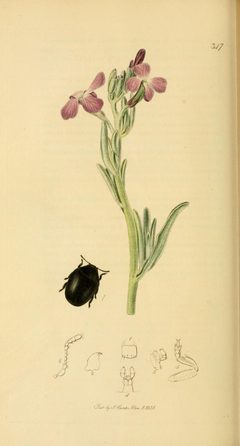
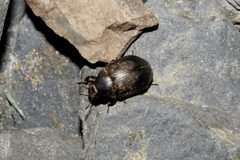
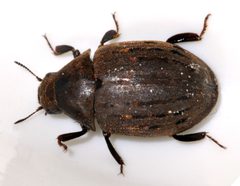
Pronunciation
How to pronounce Byrrhus: //ˈbɪr.rəs//
These audio files are automatically generated. While they are not always 100% accurate, they are a good starting point.
Identification
Members of Byrrhus can be distinguished from other byrrhid by their strongly convex, oval body form that facilitates conglobation. The genus is characterized by a compact, rounded shape with the pronotum and forming a nearly complete sphere when the is rolled up. Specific -level identification requires examination of subtle differences in punctation, coloration, and male genitalia.
Images
Habitat
in this are typically found in moist microhabitats, particularly among mosses, lichens, and accumulated plant debris. They inhabit environments ranging from forest floors to rocky areas with sufficient humidity and cover.
Distribution
Distribution records indicate presence in Denmark (DK) and Norway (NO). The has a broad distribution across the Holarctic region, though specific range details vary by .
Behavior
Byrrhus exhibit conglobation—rolling into a compact ball when disturbed—as a primary defense mechanism. This is facilitated by their rounded body form and the tight fit between the pronotum and .
Ecological Role
As decomposers associated with moss and lichen , these beetles contribute to nutrient cycling in moist terrestrial .
Similar Taxa
- CytilusAnother of pill beetles in Byrrhidae; distinguished from Byrrhus by differences in body proportions and the degree of conglobation capability
- PedilophorusRelated byrrhid ; separated from Byrrhus by structural differences in the pronotal and elytral margins