
Byrrhinae
Latreille, 1804
pill beetles
Tribe Guides
3- Byrrhini
- Pedilophorini
- Simplocariini(pill beetles)
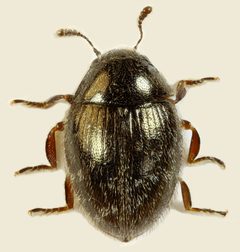
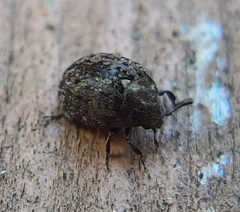
Byrrhinae is a of pill beetles within the Byrrhidae, established by Latreille in 1804. The subfamily comprises approximately 25 and at least 160 described . Members are small, compact beetles with a characteristic rounded, pill-like body form that enables conglobation—rolling into a ball when disturbed. Byrrhinae represents the more species-rich of the two subfamilies in Byrrhidae.
Pronunciation
How to pronounce Byrrhinae: //bɪˈraɪni//
These audio files are automatically generated. While they are not always 100% accurate, they are a good starting point.
Identification
Distinguished from the other in Byrrhidae (Cytilinae) primarily by antennal structure: Byrrhinae typically have 11-segmented with a 3-segmented club, whereas Cytilinae have 10-segmented antennae with a 2-segmented club. Additionally, Byrrhinae generally exhibit more pronounced body convexity and more complete conglobation ability. Identification to requires examination of antennal club segmentation, tarsal formula, and details of prosternal process structure.
Images
Habitat
Found in diverse terrestrial , particularly in moist, sheltered microhabitats. Common in leaf litter, moss, humus, and soil crevices. Many associated with rocky or gravelly substrates, including riverbanks and lakeshores. Some occur in sandy habitats or under stones and logs. Moisture availability appears critical for most species.
Distribution
Worldwide distribution with representatives on all continents except Antarctica. Particularly diverse in temperate regions of the Northern Hemisphere. Well-represented in the Palearctic, Nearctic, and parts of the Neotropical and Australasian regions. Individual distributions vary considerably.
Seasonality
active primarily during spring and summer in temperate regions, with some extending into autumn. Activity patterns influenced by moisture availability; many species become active following rains. typically occurs as adults in protected microhabitats.
Diet
Larvae feed on decaying plant matter, , and possibly fungal in soil and leaf litter. feeding habits poorly documented for most ; likely consume decaying plant material, pollen, or algae based on limited observations of related .
Life Cycle
Complete (holometabolous). laid in soil or decaying organic matter. Larvae elongate, cylindrical, and somewhat C-shaped, typical of byrrhid larvae, inhabiting soil or litter layers. occurs in soil. Development duration varies; many likely in temperate regions, though specific data limited for most .
Behavior
Primary defensive is conglobation—rolling into a tight ball when disturbed, with appendages concealed beneath the body. This pill-like posture protects vulnerable surfaces. are slow-moving and cryptic, remaining concealed in substrate during unfavorable conditions. Not capable of in many due to reduced hind wings.
Ecological Role
Decomposers contributing to nutrient cycling in soil and leaf litter systems. Larval feeding on decaying organic matter facilitates breakdown of plant material. Serve as prey for various soil-dwelling and small vertebrates.
Human Relevance
Minimal direct economic importance. Occasionally noticed by naturalists and entomologists due to distinctive conglobation . Some may be incidentally collected in soil or pitfall traps in ecological studies. Not considered agricultural pests or beneficial biocontrol agents.
Similar Taxa
- CytilinaeOther in Byrrhidae; distinguished by 10-segmented with 2-segmented club versus 11-segmented with 3-segmented club in Byrrhinae; generally less convex body form
- Coccinellidae (lady beetles)Similar rounded, convex body form; distinguished by exposed , non-conglobating posture, and typically patterned with contrasting spots
- Myrmecophilous beetles (various Staphylinidae, Histeridae)Some exhibit conglobation; distinguished by different antennal structure, tarsal formula, and association with nests
More Details
Taxonomic history
Byrrhinae was established by Pierre André Latreille in 1804. The has undergone various revisions, with generic concepts refined particularly in the 20th century. Modern phylogenetic studies support the monophyly of Byrrhinae and its sister relationship to Cytilinae within Byrrhidae.
Conglobation mechanics
The ability to conglobate is facilitated by body shape, flexible between body segments, and grooves on the surface that receive and legs. This defensive posture is shared with some other groups (e.g., certain Coccinellidae, Chrysomelidae) but is particularly perfected in Byrrhidae.