
Byrrhini
Latreille, 1804
Genus Guides
4- Arctobyrrhus
- Byrrhus(pill beetles)
- Cytilus(pill beetles)
- Porcinolus(pill beetles)
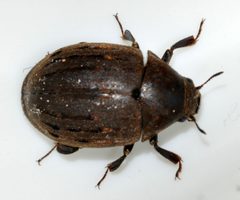
Byrrhini is a tribe of pill beetles within the Byrrhidae. Members are small, compact beetles with a characteristic rounded, pill-like body form. The tribe includes multiple , most notably Byrrhus. These beetles are primarily associated with moss and lichen .
Pronunciation
How to pronounce Byrrhini: /bɪrˈhiːnaɪ/
These audio files are automatically generated. While they are not always 100% accurate, they are a good starting point.
Identification
The pill-like, highly convex body shape distinguishes Byrrhini from most other small beetles. The combination of short , concealed legs, and ability to contract into a rounded form separates them from similarly sized Chrysomelidae or Coccinellidae. Within Byrrhidae, tribal assignment requires examination of tarsal structure and antennal club details.
Images
Appearance
Small to minute beetles, usually 2–6 mm in length. Body strongly convex and oval, giving a pill-like or tortoise-like silhouette. smooth or with fine punctation, often with metallic or dull coloration. short, to slightly clubbed. Legs short, often partially concealed beneath body. Some have elytral margins that can be drawn down to cover the surface.
Habitat
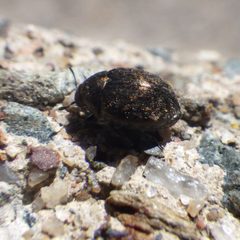
Primarily associated with mosses, lichens, and decaying plant matter in moist environments. Found in leaf litter, humus, and among rocks in streambeds or seepage areas. Some occur in sandy or gravelly substrates.
Distribution
Holarctic distribution with greatest diversity in the Palearctic region. Present across North America, Europe, and Asia. Some extend into montane and subarctic zones.
Seasonality
active primarily in spring and early summer. Some observed into autumn. Activity patterns tied to moisture availability and moss growth cycles.
Behavior
When disturbed, contract appendages and draw elytral margins downward, forming a compact pill-like shape that resists desiccation and . Slow-moving, cryptic habits. Poor fliers despite fully developed wings in most .
Ecological Role
Contributors to decomposition in moss-based and humus microhabitats. May facilitate nutrient cycling in moist, organic-rich substrates.
Human Relevance
No significant economic importance. Occasionally encountered by bryologists and entomologists sampling moss . Some have been used as indicators of continuity in palearctic studies.
Similar Taxa
- CytiliniAnother tribe in Byrrhidae; distinguished by more elongate body form and different tarsal formula.
- CoccinellidaeLady beetles share rounded convex shape but have exposed legs, longer with distinct club, and often spotted coloration.
- Chrysomelidae (Cryptocephalinae)Some leaf beetles have similar compact form but possess longer and different tarsal structure.
More Details
Systematic notes
The tribal classification within Byrrhinae has been revised multiple times. Some authors have treated Byrrhini as equivalent to the Byrrhinae, while others recognize multiple tribes. The current circumscription follows recent molecular and morphological studies.