
Byrrhus pilula
(Linnaeus, 1758)
Common Pill-beetle, common pill beetle
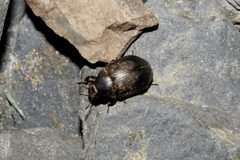
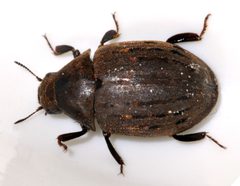
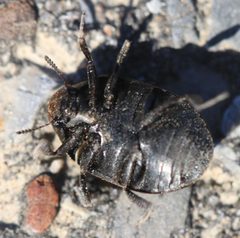
Byrrhus pilula is a Holarctic pill beetle in the Byrrhidae, first described by Linnaeus in 1758. and larvae feed on bryophytes and in damp, sandy or stony soils across moorlands, heathlands, and shorelines. The is notable for its defensive of retracting all appendages into grooves to feign death, resembling a rabbit dropping or seed.
Pronunciation
How to pronounce Byrrhus pilula: /ˈbɪr.əs pɪˈluː.lə/
These audio files are automatically generated. While they are not always 100% accurate, they are a good starting point.
Identification
Images
Habitat
Moorland, heathland, and sandy shorelines; found beneath logs and stones, and at plant roots in damp, sandy or stony soils.
Distribution
Holarctic: Palearctic from Ireland and Spain east to Japan; Nearctic in northern Canada.
Diet
Moss, , and liverworts (both larvae and ).
Behavior
When disturbed, retracts all appendages into body grooves and feigns death, resembling a rabbit dropping or seed.
Ecological Role
Forms part of the diet of birds including Red Kite (Wales), Kestrel, and Little Owl; contributes to nutrient cycling through consumption of bryophytes and .
Human Relevance
No direct economic importance; occasionally encountered in field collections and ecological studies.
Similar Taxa
- Other Byrrhus speciesShare pill-like defensive posture but differ in elytral color pattern and body proportions; B. pilula specifically has the characteristic rows of dark and light brown markings.
More Details
Predation records
Documented in pellets of Kestrel and Little Owl, and in dietary studies of Red Kite in Wales.