
Acmaeodera variegata
LeConte, 1852
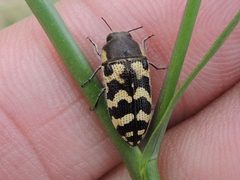
Acmaeodera variegata is a metallic wood-boring beetle in the Buprestidae, native to North America. The was described by LeConte in 1852. It has been collected from flowers of Fallugia paradoxa (Apache plum) and Verbesina encelioides (cowpen daisy) in Arizona, and is associated with Cercocarpus (mountain mahogany) as a larval . The species is part of the diverse Acmaeodera fauna of western North America.
Pronunciation
How to pronounce Acmaeodera variegata: //əkˌmiːəˈdɛrə ˌvɛəriˈeɪɡətə//
These audio files are automatically generated. While they are not always 100% accurate, they are a good starting point.
Images
Habitat
Associated with Cercocarpus ledifolius (curl-leaf mountain mahogany) and related in mountainous western regions. have been observed on flowers in dry, open including desert chaparral and oak-juniper woodlands.
Distribution
North America; specifically recorded from Arizona and associated with western montane regions.
Seasonality
active in late spring to early summer; collected in Arizona during late May to early June.
Diet
Larvae develop in dead branches of Cercocarpus (mountain mahogany). feed on flower nectar and pollen, recorded from Fallugia paradoxa and Verbesina encelioides.
Host Associations
- Cercocarpus ledifolius - larval dead branches
- Fallugia paradoxa - food sourceflowers
- Verbesina encelioides - food sourceflowers
Life Cycle
Complete with larval development in dead wood of plants and free-living stage. Specific timing of not documented.
Behavior
visit flowers for feeding. Larval wood-boring habit typical of the .
Ecological Role
Larval development in dead branches contributes to wood decomposition in montane . flower visitation may contribute to pollination, though this has not been studied.
Similar Taxa
- Acmaeodera quadrivittatoidesSympatric and syntopic on Fallugia paradoxa flowers; A. variegata distinguished by variegated rather than vittate elytral pattern
- Acmaeodera horniOccurs at same locality and plant; A. variegata lacks the distinctive horni color pattern