
Acmaeodera miliaris
Horn, 1878
Acmaeodera miliaris is a metallic wood-boring beetle in the Buprestidae, first described by Horn in 1878. The occurs in Central America and North America. It belongs to a large of jewel beetles commonly associated with flowers and woody vegetation in arid and semi-arid regions. Like other members of Acmaeodera, are typically active during spring and early summer.
Pronunciation
How to pronounce Acmaeodera miliaris: //ˌæk.mi.oʊˈdɪə rə mɪlˈjɑr.ɪs//
These audio files are automatically generated. While they are not always 100% accurate, they are a good starting point.
Identification
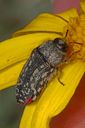
Acmaeodera miliaris can be distinguished from similar Acmaeodera by its specific elytral pattern and coloration. The species name 'miliaris' (meaning 'millet-like' or referring to small spots) suggests a spotted or mottled appearance. are small to medium-sized for the , with metallic coloration typical of Buprestidae. Positive identification requires examination of specific morphological characters including the arrangement of elytral maculations and genitalic structures. Similar species include A. mixta and A. neglecta, which may overlap in distribution and flower-visiting .
Images
Habitat
include dry grasslands, open woodlands, and desert scrub where plants and nectar sources occur. The has been documented in xeric dolomite prairie remnants and associated post oak woodlands. frequent flowering plants in these open, sun-exposed environments.
Distribution
Recorded from Central America and North America. Specific localities include the southwestern United States (Texas, Oklahoma) and adjacent regions. The occurs in the Nearctic and Neotropical biogeographic realms.
Seasonality
are active primarily in late spring to early summer. Field records indicate activity from mid-May through June, with peak abundance coinciding with flowering of plants such as Thelesperma .
Behavior
have been observed visiting flowers, particularly yellow-flowered composites in the Thelesperma. They are and active in warm, sunny conditions. Like other Acmaeodera, adults are strong fliers and may be attracted to white surfaces. Larval development presumably occurs in dead or dying woody branches of plants, though specific host plants for this have not been definitively established.
Similar Taxa
- Acmaeodera mixtaSimilar size, flower-visiting on Thelesperma, and overlapping distribution in Texas and Oklahoma. Distinguished by specific elytral pattern.
- Acmaeodera neglectaOverlaps in and flower associations. A. neglecta is generally more widespread and may show different elytral maculation.
- Acmaeodera neoneglectaSimilar flower-visiting and regional distribution. Requires close examination of elytral pattern and punctation for separation.
More Details
Type Locality and Description
Described by George Henry Horn in 1878. The specific epithet 'miliaris' refers to the millet-like or finely spotted appearance of the .
Collection Methodology
Based on field observations of , are best collected by sweeping or netting flowers, particularly yellow composites, or by beating dead branches of suspected plants. White bowl traps have proven effective for capturing Acmaeodera in some .