
Acmaeodera mixta
LeConte, 1860
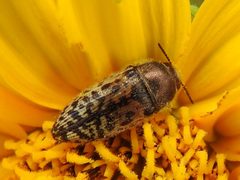
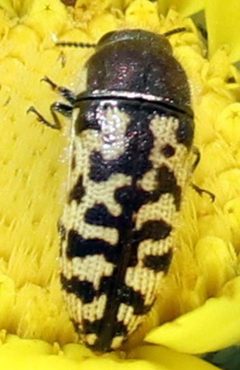
Acmaeodera mixta is a of metallic wood-boring beetle in the Buprestidae. It is found across Central America and North America. Field observations indicate are frequently encountered on flowers, particularly composites and mesquite blooms, suggesting a flower-visiting habit common among Acmaeodera species.
Pronunciation
How to pronounce Acmaeodera mixta: //ˌækmiˈdɛrə ˈmɪkstə//
These audio files are automatically generated. While they are not always 100% accurate, they are a good starting point.
Images
Habitat
Observations indicate occurrence in arid and semi-arid regions including sand dune systems, desert grasslands, and open rangeland with scattered woody vegetation. have been collected from flowering plants in sandy and areas with recent rainfall-triggered insect .
Distribution
Central America and North America. Specific records from the southwestern United States including New Mexico and west Texas.
Seasonality
have been observed in June, with activity triggered by rainfall events in arid regions.
Behavior
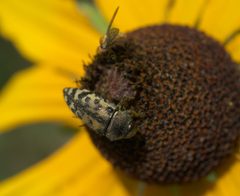
have been observed flying to and perching on flowers. Multiple individuals may occur on the same flower or plant. Activity appears tied to rainfall-triggered patterns in desert environments.
More Details
Flower associations
Field records document on Thelesperma, Gaillardia, Prosopis (mesquite), Oenothera, Baccharis, Rudbeckia, and unidentified yellow composites and white-flowered plants. This flower-visiting is consistent but specific plant relationships remain undocumented.
Collection methods
Specimens have been collected by sweeping vegetation and hand-picking from flowers. are active during daytime in warm conditions.