Acmaeodera amplicollis
LeConte, 1866
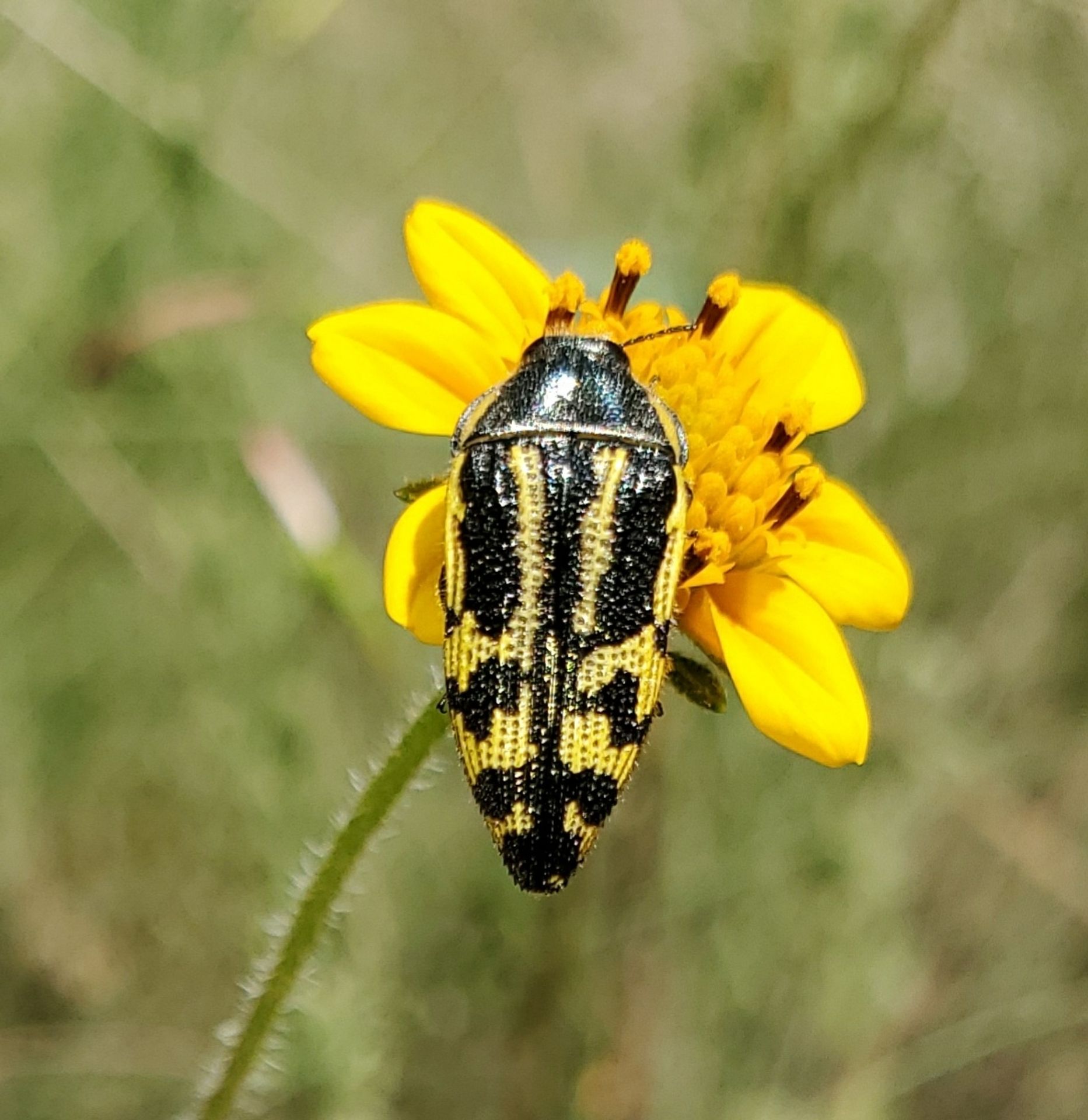
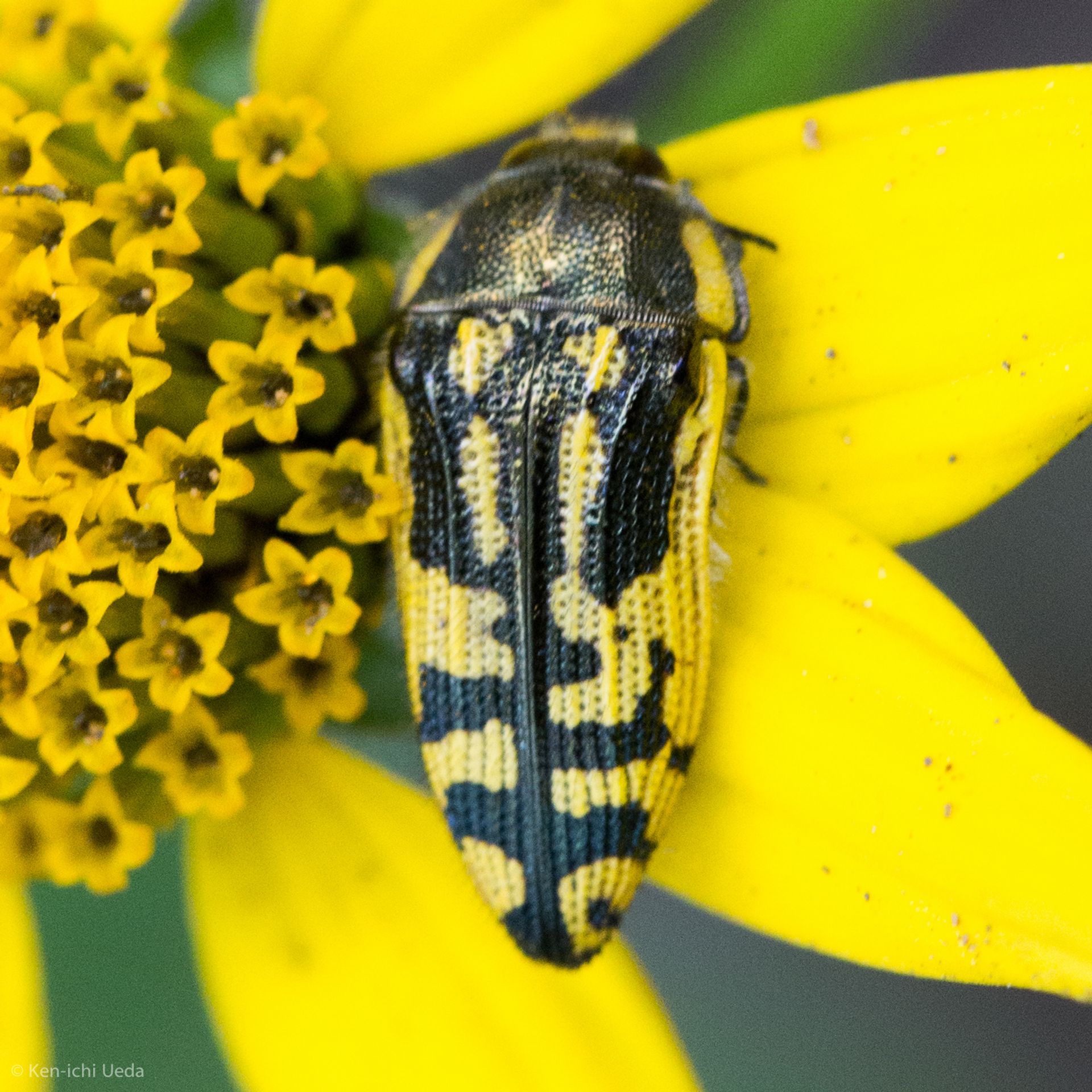
Acmaeodera amplicollis is a metallic wood-boring beetle in the Buprestidae. The is distributed across Central America and North America. It is frequently observed visiting flowers of various composite plants (Asteraceae), particularly species of Isocoma, Heterotheca, Heliomeris, and Gutierrezia. are active during late summer and early autumn.
Pronunciation
How to pronounce Acmaeodera amplicollis: /ækmiːoʊˈdɛrə æmplɪˈkɒlɪs/
These audio files are automatically generated. While they are not always 100% accurate, they are a good starting point.
Identification
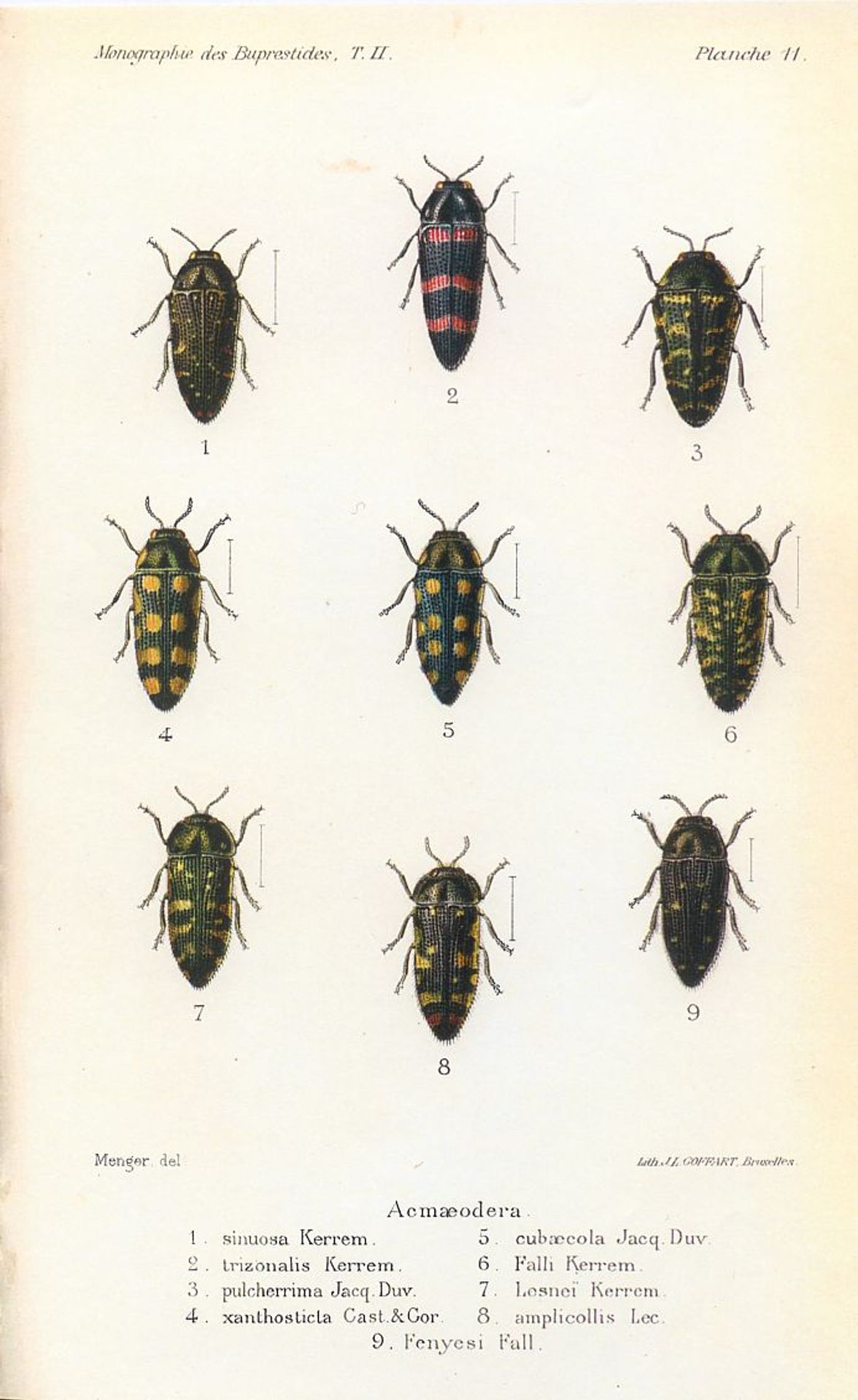
Acmaeodera amplicollis can be distinguished from similar Acmaeodera by its relatively broad pronotum (the species epithet 'amplicollis' refers to this widened 'neck' region). The species typically exhibits metallic coloration common to the , though specific color patterns should be verified against or authoritative keys. It occurs sympatrically with A. scalaris, A. disjuncta, A. rubronotata, and A. gibbula in Arizona and New Mexico, from which it must be distinguished by careful examination of pronotal shape and elytral sculpturing.
Images
Habitat
The inhabits dry, open including desert grasslands, chaparral, and rocky hillsides. It is strongly associated with flowering composite plants (Asteraceae), where are most frequently encountered. Observations indicate preference for areas with Isocoma tenuisecta, Heterotheca subaxillaris, Heliomeris longifolia, and Gutierrezia microcephala in bloom.
Distribution
Central America and North America. Specific records include: Arizona (Dripping Springs Mountains, Willcox area, Kitt Peak National Observatory, Santa Catalina Mountains, Santa Rita Mountains), New Mexico (Rodeo area), and presumably extending into Mexico given the Central America record. The has been documented at elevations ranging from lowland desert to montane areas above 2000 meters.
Seasonality
are active from late August through September. Observations from Arizona indicate peak activity in early September, with individuals found on both fully blooming and pre-blooming composite flowers.
Host Associations
- Isocoma tenuisecta - flower visitor observed on flowers, including pre-blooming
- Heterotheca subaxillaris - flower visitor observed on flowers
- Heliomeris longifolia - flower visitor observed on flowers at Kitt Peak
- Gutierrezia microcephala - flower visitor observed on flowers
- Hymenothrix wislizeni - flower visitor observed on flowers
- Solidago velutina - flower visitor observed on flowers at Kitt Peak
- Heterotheca fulcrata - flower visitor observed on flowers
- Hymenothrix wrightii - flower visitor observed on flowers at Kitt Peak
Behavior
are flower visitors, frequently found on yellow composite flowers where they likely feed on pollen and nectar. The has been observed sharing flowers with multiple (A. scalaris, A. disjuncta, A. rubronotata, A. gibbula, A. amabilis, A. decipiens) without apparent aggression. Individuals may perch on grass stems when not actively foraging.
Ecological Role
function as of composite flowers (Asteraceae) through their frequent visitation to feed on pollen and nectar. The contributes to local diversity in arid and semi-arid , serving as prey for various including spiders and predatory .
Similar Taxa
- Acmaeodera scalarisOccurs sympatrically and shares flower ; distinguished by pronotal shape and elytral details
- Acmaeodera disjunctaFrequently found on same flowers; A. disjuncta typically shows different pronotal and elytral pattern
- Acmaeodera rubronotataOverlapping distribution and flower visitation; distinguished by coloration and pronotal form
- Acmaeodera gibbulaShares Hymenothrix wislizeni as flower ; A. gibbula has more globose body form
More Details
Taxonomic note
The name 'amplicollis' derives from Latin 'amplus' (broad, large) and 'collis' (neck/hill), referring to the broad pronotum characteristic of this species.
Collecting notes
The is readily collected by sweeping or hand-picking from flowers of its plants during peak bloom. It has been successfully collected at light in some areas, though flower visitation appears to be the primary activity pattern.