
Dicerca obscura
(Fabricius, 1781)
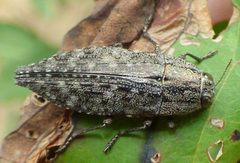
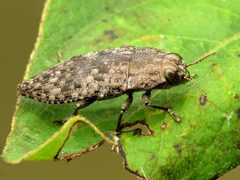
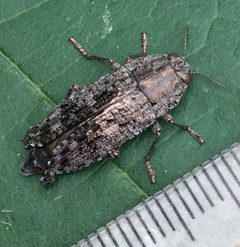
A large jewel beetle ( Buprestidae) with brownish-black coloration and cryptic appearance. are strongly associated with dead or dying persimmon trees (Diospyros virginiana), though also recorded from staghorn sumac (Rhus typhina). The name reflects its remarkable ability to blend into bark, making it difficult to detect despite its size.
Pronunciation
How to pronounce Dicerca obscura: //daɪˈsɜːrkə ɒbˈskjʊərə//
These audio files are automatically generated. While they are not always 100% accurate, they are a good starting point.
Identification
Large size for a jewel beetle; brownish-black coloration with surface sculpturing that provides effective camouflage against bark. When viewed out of context (e.g., as pinned specimens), appears conspicuously shiny and brassy, but in natural setting becomes nearly invisible against tree trunks. Similar to other Dicerca but distinguished by association and geographic range.
Images
Habitat
Mesic woodlands and areas with persimmon trees, particularly stands with recently dead or dying individuals. Found in mixed-grass prairie regions with woodland corridors, shinnery oak shrublands, and riparian zones.
Distribution
Central and eastern United States and adjacent Canada. Absent from much of New England, the Appalachian Mountains, the Allegheny Plateau, and the upper Midwest—regions lacking persimmon. Western records extend to northwestern Oklahoma; previously recorded as far west as Oklahoma City.
Diet
Larvae feed internally in wood of trees. have been observed on dead persimmon trunks; specific adult feeding habits not documented.
Host Associations
- Diospyros virginiana - primary Dead or dying trees; larvae develop in wood
- Rhus typhina - secondary Staghorn sumac; reared from this by Knull (1920)
Life Cycle
Larval development occurs within wood of trees. Specific details of developmental stages and timing not documented.
Behavior
exhibit strong cryptic , remaining motionless on bark surfaces and blending effectively with substrate. Even experienced observers frequently overlook individuals despite knowing what to search for. Adults may be found sitting exposed on trunks of dead trees.
Ecological Role
Larval development in dead or dying persimmon suggests role in wood decomposition and nutrient cycling in woodland .
Human Relevance
Collected by entomologists; notable among jewel beetle enthusiasts for the challenge of locating living specimens in the field.
Similar Taxa
- Dicerca asperataSimilar member with shiny, brassy coloration and surface sculpturing; distinguished by geographic range and associations
- Other Dicerca speciesShare -level traits of metallic appearance and wood-boring larvae; specific identification requires examination of morphological details and records