
Agrilaxia flavimana
(Gory, 1841)
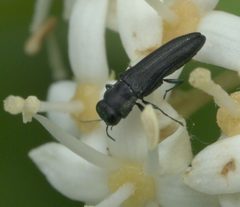
Agrilaxia flavimana is a metallic wood-boring beetle in the Buprestidae, distributed across Central America and North America. The Agrilaxia is one of several small genera of jewel beetles known to routinely visit flowers, though most Buprestidae are associated with woody vegetation. Observations suggest this occurs in prairie and open where its presumed floral grow.
Pronunciation
How to pronounce Agrilaxia flavimana: /ˌæɡrɪˈlæksiə ˌflævɪˈmeɪnə/
These audio files are automatically generated. While they are not always 100% accurate, they are a good starting point.
Identification
Can be distinguished from the superficially similar and more frequently encountered Acmaeodera by -level morphological characters. From other Agrilaxia species, identification to species level requires examination of specific characters not detailed in general sources. The combination of small size, metallic luster, and consistent presence on flowers (particularly in prairie ) helps separate it from wood-associated buprestids.
Images
Habitat
Prairie and open where flowering herbaceous plants occur. Associated with native wildflower in the southern Great Plains and adjacent regions.
Distribution
Central America and North America. Documented from Ontario, Canada and throughout the United States range including Oklahoma and Texas. The has been recorded from Missouri as well.
Seasonality
activity coincides with flowering periods of plants. In the southern Great Plains, has been observed in June.
Diet
feed on flower petals. Larval plant unconfirmed, but presumed to be herbaceous based on adult flower association and comparison with related .
Host Associations
- Torilis arvensis - flower visitationObserved on flowers of this introduced plant; may be incidental or opportunistic
Life Cycle
Complete with wood-boring or stem-boring larvae typical of . Specific larval unknown; presumed to tunnel in living stems or roots of herbaceous plants rather than dead wood, making rearing difficult.
Behavior
routinely visit flowers for feeding and mating. One of few North American Buprestidae with consistent flower-visiting outside of Acmaeodera. Adults have been observed in group mating on flowers.
Ecological Role
function as or pollen feeders in prairie and open . Larval role in plant unknown due to lack of confirmed records.
Similar Taxa
- AcmaeoderaMost common flower-visiting buprestid in North America; distinguished by morphological characters and often more contrasting elytral color patterns
- Agrilaxia texanaClosely related and potentially sympatric ; requires careful examination for separation
- AgrilusLarge with some flower-visiting exceptions, but most associated with woody plants and foliage rather than flowers
More Details
Taxonomic note
Originally described as Anthaxia flavimana by Gory in 1841; later transferred to Agrilaxia. The Agrilaxia represents a distinct lineage of flower-associated buprestids separate from the more speciose Acmaeodera.