
Actenodes
Dejean, 1833
Species Guides
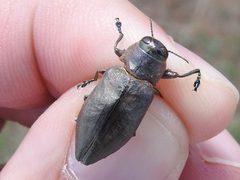
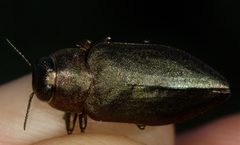
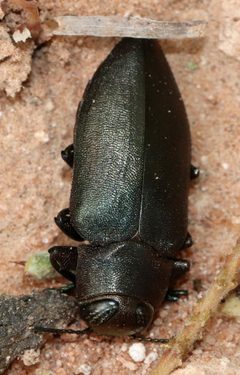
8Actenodes is a of jewel beetles ( Buprestidae) containing approximately 100 described distributed across the Americas, Africa, and Madagascar. The genus includes both widespread species and geographically restricted endemics. Several North American species have been documented as prey of the predatory Cerceris fumipennis, which has been used in biosurveillance programs. Species in this genus are primarily associated with woody vegetation, particularly leguminous trees and shrubs.
Pronunciation
How to pronounce Actenodes: //ækˈtɛnoʊdiːz//
These audio files are automatically generated. While they are not always 100% accurate, they are a good starting point.
Identification
Actenodes are characterized by their robust, somewhat flattened body form typical of many Buprestidae, with metallic coloration ranging from bronze to green to blue. Males of some species exhibit striking sexually dimorphic facial coloration, with the flash-green or green-violaceous compared to the bronze female face—a trait useful for distinguishing similar species. Surface sculpturing and punctation patterns vary among species and are important diagnostic characters. The can be distinguished from related buprestid genera by combinations of antennal structure, pronotal shape, and elytral .
Images
Habitat
occur in diverse including tropical thorn woodlands, desert scrub, sand dune , and riparian corridors. Many species are associated with woody vegetation, particularly members of Fabaceae such as Acacia and Prosopis. The beetles are often found on flowering plants or beaten from living or dead branches of trees.
Distribution
The has a disjunct distribution spanning the southwestern United States through Mexico and Central America to northern South America, with additional in Africa and Madagascar. North American records include the southwestern states (Arizona, New Mexico, Texas) and sporadic occurrences further east. Mexican is particularly high in the southern states of Oaxaca, Puebla, Guerrero, and Michoacán.
Seasonality
activity varies by region and . In the southwestern United States and northern Mexico, adults have been collected from June through July, often following rains that trigger insect . Tropical species likely have more extended or year-round activity periods correlated with local rainy seasons.
Diet
feed on floral resources and possibly foliage of plants. Larvae are wood-borers, developing in dead branches and trunks of woody plants. Documented larval hosts include Fabaceae (Acacia, Prosopis, Robinia, Sapindus) and possibly other hardwoods. The widespread A. calcaratus develops in dead wood of various fabaceous hosts.
Host Associations
- Acacia - larval dead branches
- Prosopis - larval dead branches
- Robinia - occurrence beaten from foliage
- Sapindus - occurrence associated with flowering soapberry
Life Cycle
Complete with , larval, pupal, and stages. Larvae are wood-borers creating galleries in dead or dying wood. Developmental timing varies; in temperate regions, adults emerge during summer months, often following precipitation events. Specific duration is unknown for most .
Behavior
are and active during warm periods. They have been observed on flowers, foliage, and dead wood of plants. When disturbed, they exhibit typical buprestid of dropping to the ground and playing dead. Some are attracted to blacklight traps. Adults are capable of strong and can be difficult to capture due to their alertness and rapid escape response.
Ecological Role
As larvae, Actenodes contribute to wood decomposition and nutrient cycling in forest and woodland . Their association with dead and dying wood places them in the successional of decomposers. As prey, they serve as food resources for specialized including the crabronid Cerceris fumipennis.
Human Relevance
Several have been used as indicator organisms in biosurveillance programs targeting buprestids. The predatory Cerceris fumipennis, which provisions its nests with Actenodes and other buprestids, has been employed by citizen scientists to detect emerald ash borer (Agrilus planipennis) and other . The beetles are collected by entomologists for scientific study and are of interest to natural history observers due to their metallic coloration.
Similar Taxa
- AgrilusBoth are wood-boring Buprestidae, but Agrilus are generally more elongate and slender with differently proportioned antennal segments. Agrilus larvae typically mine in living or recently dead wood of specific , while Actenodes larvae occur in dead branches.
- ChrysobothrisSimilar robust body form and metallic coloration, but Chrysobothris typically have more pronounced elytral and different antennal structure. Chrysobothris are also primarily wood-borers but often in different categories.
- AcmaeoderaBoth occur in similar and on flowers, but Acmaeodera are generally smaller, more elongate, and have distinct elytral maculation patterns. Acmaeodera larvae typically develop in herbaceous stems or smaller diameter wood.
More Details
Taxonomic History
The has undergone recent taxonomic revision, with two new (A. scabrosus and A. michoacanus) described from southern Mexico in 2013 based on subtle morphological differences from the widespread A. calcaratus. These species had been collected as early as 1992 but remained unrecognized due to their close resemblance to the common species.
Biosurveillance Significance
Actenodes acornis and A. simi have been documented among prey items collected from Cerceris fumipennis nests, contributing to the demonstrated utility of this for monitoring buprestid and detecting .
Sources and further reading
- BugGuide
- Wikipedia
- GBIF taxonomy match
- iNaturalist taxon
- NCBI Taxonomy
- Catalogue of Life
- “Rare jewel beetles discovered in Mexico by team of scientists!” | Beetles In The Bush
- A jewel of a beetle | Beetles In The Bush
- ID Challenge #19 | Beetles In The Bush
- Mexico 1992—Gang of Ten | Beetles In The Bush
- sun spiders | Beetles In The Bush
- Wasp, Geographic Data Improve Surveillance for Emerald Ash Borer
- Two new species of Actenodes Dejean (Coleoptera: Buprestidae) from southern Mexico, with distributional and biological notes on Buprestidae from Mexico and Central America