
Actenodes mendax
Horn, 1891
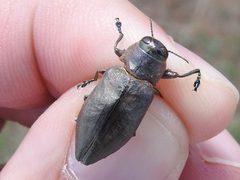
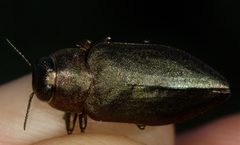
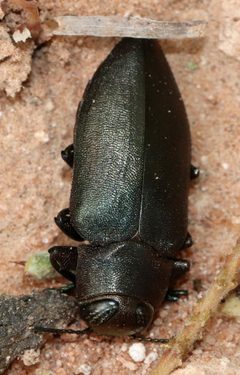
Actenodes mendax is a of metallic wood-boring beetle in the Buprestidae. It is found in North America. The species was described by Horn in 1891. Based on field observations, have been collected on Prosopis glandulosa (honey mesquite) in clay/gypsum mixed-grass prairie in Oklahoma.
Pronunciation
How to pronounce Actenodes mendax: /ˈæktɪnoʊdiːz ˈmɛndæks/
These audio files are automatically generated. While they are not always 100% accurate, they are a good starting point.
Identification
Distinguished from other Actenodes by subtle morphological characters. In the field, found on dead or dying branches of Prosopis glandulosa (mesquite). May be confused with other Actenodes species occurring in similar ; precise identification requires examination of surface , punctation patterns, and male genitalia.
Images
Appearance
Metallic wood-boring beetle with typical Buprestidae body form—elongate, somewhat flattened, with metallic coloration. Specific coloration and detailed morphological features not documented in available sources.
Habitat
Clay/gypsum mixed-grass prairie with scattered Prosopis glandulosa (honey mesquite) trees. Associated with dead or dying branches of mesquite.
Distribution
North America. Documented from northwestern Oklahoma (Gloss Mountain State Park, Major County) based on field collection records. Broader distribution within North America not specified in available sources.
Seasonality
active in late spring to early summer. Field records from late April to early May in Oklahoma.
Host Associations
- Prosopis glandulosa - association collected on dead branches of honey mesquite
Behavior
found on dead or dying branches of trees. Attracted to recently dead wood, consistent with wood-boring .
Ecological Role
Wood-boring whose larvae likely develop in dead branches of woody plants, contributing to decomposition and nutrient cycling in prairie .
Similar Taxa
- Actenodes calcaratusSimilar appearance and preference; distinguished by subtle morphological characters including surface , coloration in males, and male genitalia
- Other Actenodes species members share metallic coloration and association with dead wood; precise identification requires detailed examination
More Details
Taxonomic note
The name 'mendax' (Latin for 'lying' or 'deceptive') may allude to the species' resemblance to other Actenodes species, requiring careful examination for correct identification.
Collection history
Specimens have been collected through direct observation on branches rather than through trapping or light attraction methods.
Sources and further reading
- BugGuide
- Wikipedia
- GBIF taxonomy match
- iNaturalist taxon
- Catalogue of Life
- checkered beetles | Beetles In The Bush
- “Rare jewel beetles discovered in Mexico by team of scientists!” | Beetles In The Bush
- Hot Competition: Climate Change, Invasive Fly Displace a Native Blueberry Pest
- ID Challenge #19 | Beetles In The Bush
- A jewel of a beetle | Beetles In The Bush
- Mexico 1992—Gang of Ten | Beetles In The Bush