
Melalgus plicatus
(LeConte, 1874)
Groove-sided Bostrichid
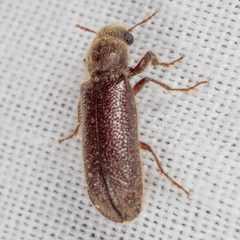
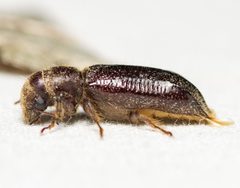
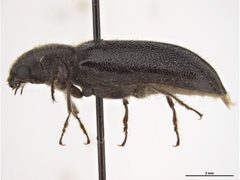
Melalgus plicatus is a of horned powder-post beetle in the Bostrichidae. It occurs across the Americas from North America through Central America to South America. The species is characterized by grooved lateral sides, which gives rise to its . As a member of the Bostrichidae, it belongs to a family of wood-boring beetles often associated with dead or dying wood.
Pronunciation
How to pronounce Melalgus plicatus: //mɛˈlælɡəs plaɪˈkeɪtəs//
These audio files are automatically generated. While they are not always 100% accurate, they are a good starting point.
Identification
Distinguished from other Bostrichidae by the distinct longitudinal grooves or plications on the sides of the pronotum and . The specific epithet "plicatus" refers to this folded or grooved appearance. Males are readily identified by their prominent horns. Similar in the Melalgus may lack these lateral grooves or have different horn .
Images
Appearance
Medium-sized with grooved or plicate (folded) lateral sides of the pronotum and , giving a ridged appearance. Like other horned powder-post beetles, males possess prominent cephalic horns. Body form is cylindrical and adapted for wood-boring. Coloration is generally dark brown to black.
Habitat
Associated with dead or dying wood, including hardwoods and softwoods. Inhabits forested areas, woodlands, and areas with accumulated woody debris. Has been observed in both natural and anthropogenic settings where suitable wood substrates occur.
Distribution
Widely distributed across the Americas: North America (United States, Mexico), Central America, and South America. Records span from temperate to tropical regions.
Diet
Larvae bore into and feed on wood, likely preferring dead or dying hardwoods and softwoods. Specific preferences have not been documented.
Life Cycle
Complete with , larva, pupa, and stages. Larvae are wood-borers that tunnel through wood, creating powdery characteristic of powder-post beetles. Developmental timing varies with climate and wood substrate.
Behavior
are attracted to wood and may bore into wooden structures. Both sexes tunnel into wood, though males use their horns in combat with other males for access to females and oviposition sites.
Ecological Role
Decomposer of dead wood, contributing to nutrient cycling and wood decomposition in forest . Creates galleries that may be used by other organisms.
Human Relevance
Potential pest of seasoned wood, wooden structures, and timber products. The "powder-post beetle" refers to the fine, powdery produced by larval feeding, which can damage wooden items. Not among the most economically destructive bostrichids but may contribute to structural damage in some regions.
Similar Taxa
- Melalgus confertusSimilar horned powder-post beetle in the same ; distinguished by lack of distinct lateral grooves on pronotum and .
- Dinoderus spp.Other horned powder-post beetles in Bostrichidae; differ in horn structure, body proportions, and lack the characteristic grooved sides of M. plicatus.
- Lyctus spp.True powder-post beetles in Lyctidae (or Lyctinae); smaller, lack horns, and have different antennal club structure.
More Details
Taxonomic Note
The was originally described by LeConte in 1874. The Melalgus is placed in Polycaoninae, a group characterized by prominent with horned males.