
Priacma
LeConte, 1874
Species Guides
1- Priacma serrata(Priacma bleach beetle)
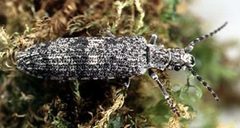
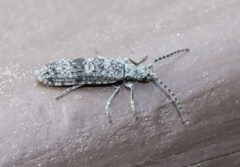
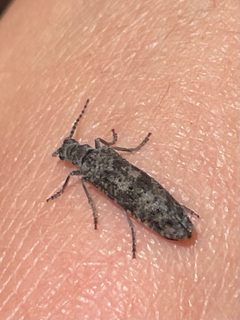
Priacma is a of reticulated beetles ( Cupedidae) containing one extant , Priacma serrata, found in western North America. The genus also includes fossil species, notably P. megapuncta from Cenomanian-aged Burmese amber. Priacma represents one of the few surviving lineages of the once-diverse Archostemata, an ancient suborder of beetles. The genus was established by J. L. LeConte in 1874.
Pronunciation
How to pronounce Priacma: /ˈpraɪəkmə/
These audio files are automatically generated. While they are not always 100% accurate, they are a good starting point.
Identification
Priacma serrata can be recognized by its elongated body, reticulated with a network-like pattern of raised , and serrated . The pronotum is narrower than the base of the elytra. have a somewhat flattened body form typical of Cupedidae. The reticulated wing covers distinguish it from most other ; within Cupedidae, it is distinguished by specific venation patterns and body proportions.
Images
Habitat
Priacma serrata inhabits coniferous forests in western North America. are often found on vegetation or under bark. Larval requirements are poorly documented but likely involve decaying wood or other decomposing plant material, consistent with other Cupedidae.
Distribution
The extant Priacma serrata is native to western North America, with records from California, Oregon, Washington, and British Columbia. Fossil species are known from Cretaceous amber deposits in Myanmar (Burma).
Life Cycle
details are poorly documented for Priacma. Based on related Cupedidae, larvae likely develop in decaying wood or plant debris, with prolonged larval stages and gradual typical of Archostemata.
Ecological Role
As a member of an ancient lineage, Priacma contributes to the decomposition of dead plant material. Its presence indicates intact forest with sufficient woody debris.
Human Relevance
Priacma has no direct economic importance. It is of scientific interest as a relict representing an ancient lineage. The is occasionally encountered by entomologists and naturalists in western North America.
Similar Taxa
- TenomergaAlso in Cupedidae with reticulated ; distinguished by differences in antennal structure and body proportions.
- CupesAnother Cupedidae with similar overall form; separated by specific venation patterns and geographic distribution (Cupes is more widespread in North America but with different range overlap).
- ApriacmaFormerly included in Priacma but now recognized as a separate based on fossil specimens from the Yixian Formation of China; distinguished by morphological differences in the fossil record.
More Details
Fossil Record
Priacma has an exceptionally long fossil history. P. megapuncta from Burmese amber dates to approximately 99 million years ago, indicating the persisted through major extinction events. This makes Priacma one of the few genera with both Cretaceous fossils and extant .
Taxonomic History
originally described as Priacma from the Yixian Formation of China were transferred to the new Apriacma in 2009, restricting Priacma to western North American extant species and select fossil .