
Tenomerga
Neboiss, 1984
Species Guides
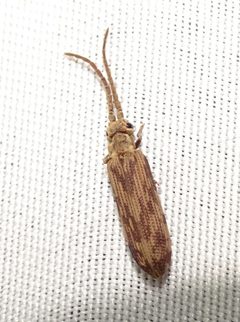
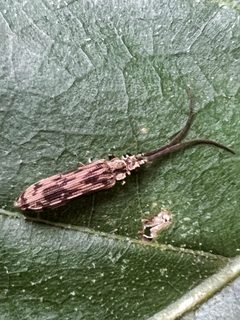
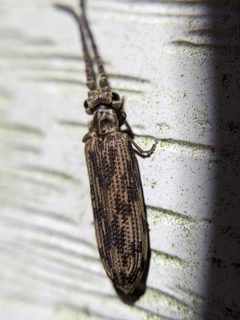
1- Tenomerga cinerea(Eastern Ashen Reticulated Beetle)
Tenomerga is a of reticulated beetles in the Cupedidae, comprising approximately 14–17 extant . Species are distributed across the eastern Palearctic, Nearctic, and Oriental regions. The genus has been subject to recent phylogenetic revision, with evidence suggesting T. leucophaea may warrant transfer to the genus Cupes, rendering Tenomerga polyphyletic as currently circumscribed.
Pronunciation
How to pronounce Tenomerga: /tɛˈnɔmɛrɡə/
These audio files are automatically generated. While they are not always 100% accurate, they are a good starting point.
Identification
Tenomerga can be distinguished from other Cupedidae by larval characters shared with Rhipsideigma, including a transverse and laterally rounded , absence of stemmata, shortened , sternal asperities, eversible lobes on abdominal segment IX, and a caudal process on IX. are reticulated beetles with the characteristic net-like elytral typical of the .
Images
Habitat
Wood; larvae are wood-borers with musculature adapted for this habit.
Distribution
Eastern Palearctic, Nearctic, and Oriental regions. Specific records include Taiwan, Fujian, Hong Kong (China), and Vermont (USA).
Life Cycle
First instar larvae possess posterodorsal and posteroventral cephalic emarginations, endocarina, reduced epicranial , lateral cardinal , sclerotized prominent ligula, reduced , tergal and sternal ampullae, and a strongly muscularized loop of the hind gut. Glands in the and have been reported in first instars. The cephalic is shifted to the prothorax due to small size, with three thoracic and eight abdominal ganglia in the postcephalic .
Behavior
Wood-boring habits in larvae.
Similar Taxa
- CupesT. leucophaea has been found to form a with Cupes capitatus, suggesting potential taxonomic overlap or need for reclassification.
- RhipsideigmaForms a well-supported cupedid subgroup with Tenomerga based on shared larval synapomorphies including shape, structure, and abdominal segment IX features.
More Details
Phylogenetic uncertainty
The monophyly of Archostemata is strongly supported, but interrelationships of remain largely unresolved. Reconstruction of and character evolution is impeded by scarcity of data on internal features and larval characters.
Mitochondrial genome
The complete mitochondrial of T. trabecula is 16,741 with 37 genes in ancestral arrangement and 76.8% A+T content; this was the first mitogenome reported for Cupedidae.
Sources and further reading
- BugGuide
- Wikipedia
- GBIF taxonomy match
- iNaturalist taxon
- NCBI Taxonomy
- Catalogue of Life
- Morphology of the first instar larva of Tenomerga mucida (Chevrolat, 1829) (Coleoptera: Archostemata: Cupedidae)
- The complete mitochondrial genome of Tenomerga trabecula (Coleoptera: Archostemata: Cupedidae) and phylogenetic analysis among Coleoptera