
Omoglymmius americanus
(Laporte, 1836)
American crudely carved wrinkle beetle
Omoglymmius americanus, commonly known as the American crudely carved wrinkle , is a small ground beetle in the Rhysodidae native to eastern North America. First described in 1836, this is characterized by its distinctive sculptured with grooves and indentations. are found in association with fungus-infested trees, where they inhabit decaying wood. The species represents one of approximately 38 observation records documented on iNaturalist.

Pronunciation
How to pronounce Omoglymmius americanus: /ˌɒmoʊˈɡlɪmiəs əˌmɛrɪˈkeɪnəs/
These audio files are automatically generated. While they are not always 100% accurate, they are a good starting point.
Identification
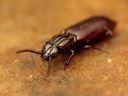
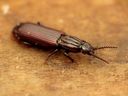
Distinguished from other ground beetles by the combination of small size (8 mm), reddish-brown coloration, and the distinctive sculpturing: three grooves on the pronotum and linearly arranged indentations on the . The Rhysodidae (wrinkle beetles) is separated from Carabidae by specialized groove-like structures on the body surface and association with decaying wood . Omoglymmius americanus can be separated from other Omoglymmius by geographic range (eastern North America) and specific patterns of elytral sculpturing.
Images
Appearance
are reddish-brown beetles approximately 8 mm in length with an elongated body form. The pronotum bears three distinct longitudinal grooves. The display numerous indentations arranged in linear patterns, giving the its reference to "crudely carved" . The overall body shape is characteristic of wrinkle beetles in the Rhysodidae.
Habitat
Occurs in fungus-infested trees, specifically within decaying wood where fungal decomposition is active. The microhabitat consists of tunnels and galleries within rotting wood of hardwood trees.
Distribution
Native to eastern North America. Documented from Canada and the United States. GBIF records confirm presence in North America with specific distribution in Canada and USA.
Host Associations
- Fungus-infested trees - occur in decaying wood with active fungal decomposition
Ecological Role
Inhabitant of fungal decay in dead wood. Specific ecological functions within this microhabitat remain undocumented.
Similar Taxa
- Other Rhysodidae speciesShare -level characteristics of grooved sculpturing and wood-inhabiting habits; distinguished by specific patterns of pronotal and elytral grooves and geographic distribution
- Small Carabidae (ground beetles)Similar size and general ground beetle form; distinguished by lack of characteristic groove-like sculpturing and different preferences
More Details
Taxonomic history
Originally described as Rhysodes americanus by Laporte in 1836, later transferred to Omoglymmius. placement has varied between Rhysodidae and Rhysodinae within Carabidae depending on classification system used.
Observation status
Relatively poorly documented with only 38 observations recorded on iNaturalist as of source date, suggesting either genuine rarity or cryptic habits in difficult-to-access microhabitats.
Sources and further reading
- BugGuide
- Wikipedia
- GBIF taxonomy match
- iNaturalist taxon
- NCBI Taxonomy
- Congratulations, UC Davis Linnaean Games Team: National Champs! | Bug Squad
- Oklahoma is More than OK for Burying Beetles
- Bug Eric: A Couple of Weirdos
- Emerald Ash Borer Infestation of White Fringetree Found to be Widespread
- North America’s itsiest bitsiest longhorned beetle | Beetles In The Bush
- Silphidae | Beetles In The Bush