
Omoglymmius
Ganglbauer, 1891
Species Guides
2- Omoglymmius americanus(American crudely carved wrinkle beetle)
- Omoglymmius hamatus(wrinkled bark beetle)
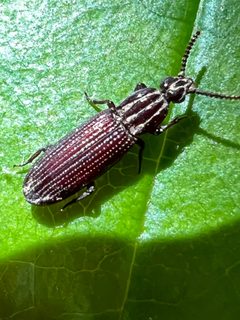
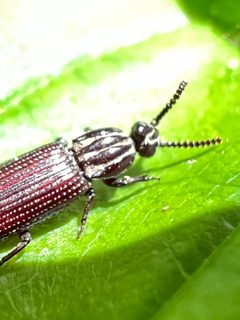
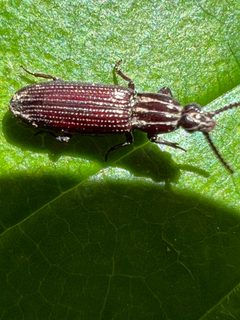
Omoglymmius is a of ground beetles in the Rhysodinae, tribe Omoglymmiini. The genus contains more than 150 described with a distribution spanning every continent except Antarctica. Species are organized into multiple subgenera based on morphological characteristics. Some species, such as Omoglymmius germari, are rare and threatened in parts of their European range.
Pronunciation
How to pronounce Omoglymmius: /ɒmoʊˈɡlɪmiəs/
These audio files are automatically generated. While they are not always 100% accurate, they are a good starting point.
Identification
Members of Omoglymmius can be distinguished from other Rhysodinae by features associated with their tribal placement in Omoglymmiini. The genus is divided into numerous subgenera (including Boreoglymmius, Caeconavitia, Carinoglymmius, Hemiglymmius, Indoglymmius, Laminoglymmius, Navitia, Nitiglymmius, Omoglymmius, Orthoglymmius, and Pyxiglymmius) based on morphological characters. -level identification requires examination of detailed structural features such as pronotal and elytral sculpturing, antennal structure, and male genitalia.
Images
Habitat
varies by . Omoglymmius germari has been documented in floodplain forests, specifically in fallen poplars felled by beavers in Moravia. The species is saproxylic, associated with dead or decaying wood. Italian of O. germari occur in the Pollino National Park in Basilicata.
Distribution
distribution across all continents except Antarctica. Documented from North America (United States, Canada), Central and South America, Europe (Italy, Czech Republic, Georgia), Africa, Asia (Japan, Taiwan, China, Thailand, Vietnam, Myanmar, India, Nepal, Bhutan, Laos, Malaysia, Singapore, Indonesia, Borneo, Philippines), and Oceania (Australia, New Guinea, Fiji, Vanuatu).
Host Associations
- Populus - Fallen poplars felled by beavers; documented for Omoglymmius germari in Moravia
Ecological Role
Saproxylic beetles associated with dead and decaying wood, contributing to wood decomposition processes. The specific ecological functions of most Omoglymmius remain undocumented.
Human Relevance
Some are of conservation concern. Omoglymmius germari has been assessed as Critically Endangered in Italy due to extreme rarity and lack of recent records, with only one confirmed record after 2000 (2018 in Pollino National Park). In the Czech Republic, O. germari is considered rare and critically endangered, with only two well-documented records. The has been proposed for IUCN status assessment in European .
Similar Taxa
- ClinidiumBoth are in Rhysodinae; Clinidium canaliculatum co-occurs with Omoglymmius germari in Italy and has been assessed as Near Threatened, showing better conservation status than Omoglymmius
- RhysodesBoth are in Rhysodinae; Rhysodes sulcatus co-occurs with Omoglymmius germari in Italy and has been assessed as Critically Endangered, showing similar threatened status
More Details
Subgeneric classification
The is divided into 11 subgenera: Boreoglymmius, Caeconavitia, Carinoglymmius, Hemiglymmius, Indoglymmius, Laminoglymmius, Navitia, Nitiglymmius, Omoglymmius (sensu stricto), Orthoglymmius, and Pyxiglymmius. These were established primarily by R.T. Bell and J.R. Bell between 1978 and 2002 based on morphological characters.
Taxonomic history
The was established by Ganglbauer in 1891. Many were originally described in other genera (particularly Rhysodes and Clinidium) and later transferred to Omoglymmius. The tribe Omoglymmiini was established to accommodate this genus and related .
Sources and further reading
- BugGuide
- Wikipedia
- GBIF taxonomy match
- iNaturalist taxon
- NCBI Taxonomy
- Catalogue of Life
- Distribution of the Rhysodes sulcatus (Fabricius, 1787) and Omoglymmius germari (Ganglbauer, 1892) (Coleoptera: Rhysodidae) in the Czech Republic
- Geographical distribution and conservation status of the threatened saproxylic beetles Rhysodes sulcatus (Fabricius, 1787), Clinidium canaliculatum (O.G. Costa, 1839) and Omoglymmius germari (Ganglbauer, 1891) in Italy (Coleoptera: Rhysodidae)