
Omoglymmius hamatus
LeConte, 1875
wrinkled bark beetle
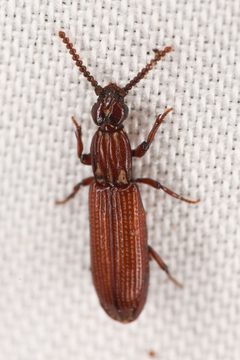
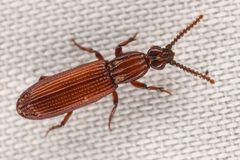
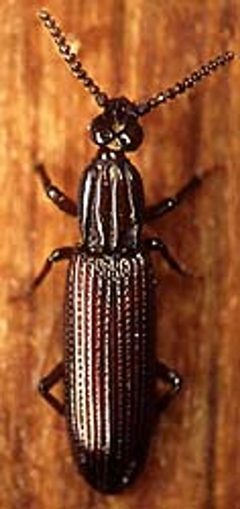
A small in the Rhysodidae, described by John Lawrence LeConte in 1875. measure 6–7 mm in length. The 'wrinkled bark beetle' applies to this but also refers to the entire family Rhysodidae.
Pronunciation
How to pronounce Omoglymmius hamatus: /oʊmoʊˈɡlɪmiəs həˈmeɪtəs/
These audio files are automatically generated. While they are not always 100% accurate, they are a good starting point.
Identification
Distinguished from other Omoglymmius by specific morphological features, though detailed diagnostic characters are not provided in available sources. The small size (6–7 mm) and association with fallen logs in mountainous regions of the Pacific Northwest and California may aid in field recognition.
Images
Appearance
beetles are 6–7 mm in length. As a member of Rhysodidae, the body is likely dorsoventrally flattened and adapted for living in tight spaces under bark, though specific morphological details for this are not documented in the provided sources.
Habitat
Found in fallen logs in mountainous areas. The occupies decaying wood typical of the Rhysodidae.
Distribution
Recorded from Washington, Oregon, Idaho, and California in the United States. GBIF records also indicate presence in Canada.
Behavior
Inhabits fallen logs, suggesting a or wood-inhabiting lifestyle consistent with characteristics.
Human Relevance
No documented economic or medical significance. The is of interest primarily to coleopterists studying the specialized fauna of decaying wood .
Similar Taxa
- Other Rhysodidae speciesShare the 'wrinkled bark ' and similar flattened body form adapted for life under bark; precise identification requires examination of specific morphological characters not detailed in available sources.
Misconceptions
The 'wrinkled bark ' can refer to the entire Rhysodidae, not exclusively to Omoglymmius hamatus.
More Details
Taxonomic note
The placement has varied in literature; some sources (NCBI, GBIF) list Carabidae as the family, while others recognize Rhysodidae as a distinct family. This reflects ongoing taxonomic debate about the rank and placement of rhysodine beetles.
Research significance
This has been subject of detailed morphological studies, including metathoracic features (Beutel 1990) and larval structures (Beutel 1992), contributing to understanding of Rhysodidae relationships within Adephaga.