
Peltodytes sexmaculatus
Roberts, 1913
six-spotted crawling water beetle
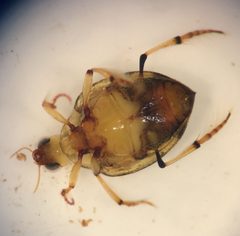
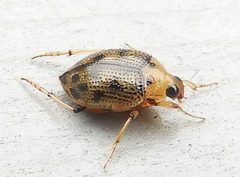
Peltodytes sexmaculatus is a of crawling water beetle in the Haliplidae, first described by Roberts in 1913. The species name refers to the six-spotted pattern on its . It is found in North America and is one of approximately 20 species in the Peltodytes. Like other haliplids, it inhabits aquatic environments and is capable of crawling through submerged vegetation.
Pronunciation
How to pronounce Peltodytes sexmaculatus: //ˌpɛl.toʊˈdaɪ.tiːz sɛksˌmæk.jʊˈleɪ.təs//
These audio files are automatically generated. While they are not always 100% accurate, they are a good starting point.
Identification
The specific epithet 'sexmaculatus' (six-spotted) suggests six distinct maculations on the , though detailed diagnostic features distinguishing it from such as Peltodytes edentulus or Peltodytes muticus are not well-documented in available sources. Members of Peltodytes are generally recognized by their convex body form and enlarged hind with swimming hairs.
Images
Habitat
Aquatic environments including ponds, lakes, and slow-moving waters with abundant submerged vegetation. As a crawling water beetle, it is associated with benthic rather than open water.
Distribution
North America. Distribution records indicate presence across the continent, though specific range boundaries are not precisely defined in available sources.
Behavior
Has been observed crawling on submerged vegetation and substrates in aquatic . Like other Haliplidae, are capable swimmers using their fringed hind legs, though they are primarily benthic rather than active open-water swimmers.
Similar Taxa
- Peltodytes edentulusSimilar size and preferences; distinguished by differences in pronotal and elytral and spotting patterns
- Peltodytes muticusOverlapping distribution; requires examination of male genitalia and elytral punctation for definitive separation
- Haliplus speciesConfamilial crawling water beetles; Peltodytes distinguished by more convex body form and different prosternal structure
More Details
Taxonomic history
Described by Roberts in 1913. The Peltodytes was historically treated as a subgenus of Haliplus but is now recognized as distinct based on morphological and molecular evidence.
Etymology
The specific epithet 'sexmaculatus' derives from Latin 'sex' (six) and 'maculatus' (spotted), referring to the six-spotted elytral pattern characteristic of this .