
Rhantus
Dejean, 1833
Species Guides
7- Rhantus atricolor
- Rhantus binotatus(Double-marked Swimming Beetle)
- Rhantus consimilis
- Rhantus gutticollis
- Rhantus sericans
- Rhantus suturellus
- Rhantus wallisi
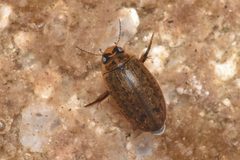
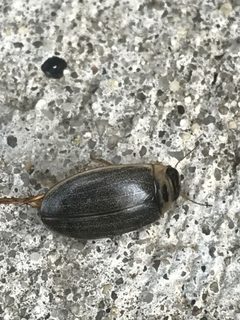
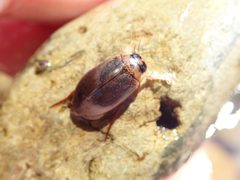
Rhantus is a of predaceous diving beetles (Dytiscidae) comprising approximately 100 with worldwide distribution. Members of this genus are primarily associated with lentic freshwater , particularly pools and marshy wetlands. The genus is currently recognized as ; taxonomic revision is anticipated following 2017 research that transferred 17 species to newly established genera (Nartus, Meridiorhantus, Caperhantus, and Carabdytes). Several species have independently colonized oceanic islands and undergone diversification.
Pronunciation
How to pronounce Rhantus: //ˈræn.təs//
These audio files are automatically generated. While they are not always 100% accurate, they are a good starting point.
Images
Habitat
Pools and marshy wetland ; lentic freshwater environments. Specific occupy Melaleuca wetlands in southwestern Australia.
Distribution
Worldwide distribution with notable occurrence in Colombia (Bogotá, Cauca, Cundinamarca, Nariño, San Andrés y Providencia, Santander, Valle del Cauca), Denmark, Norway, and southwestern Australia. The R. rugulosus-clade exhibits a disjunct Afrotropical-Oriental distribution pattern. Several are oceanic island endemics.
Ecological Role
for wetlands of high conservation value. The presence of certain , such as Rhantus simulans, has been used to identify wetlands requiring protection.
Similar Taxa
- NartusFormerly included in Rhantus; 17 transferred to this and other new (Meridiorhantus, Caperhantus, Carabdytes) in 2017 revision
- Meridiorhantus established in 2017 from former Rhantus
- Caperhantus established in 2017 from former Rhantus
- Carabdytes established in 2017 from former Rhantus
Sources and further reading
- BugGuide
- Wikipedia
- GBIF taxonomy match
- iNaturalist taxon
- NCBI Taxonomy
- Catalogue of Life
- Bug Eric: Review: Diving Beetles of the World
- New records of the diving beetle Rhantus simulans Régimbart, 1908 in south-western Australia (Coleoptera, Dytiscidae, Colymbetinae)
- Revision of the Afrotropical-Oriental Rhantus rugulosus-clade (Coleoptera: Dytiscidae)