
Elaphropus incurvus
(Say, 1830)
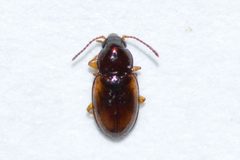
Elaphropus incurvus is a small ground beetle in the Carabidae, described by Thomas Say in 1830. It belongs to a of diminutive carabids often associated with moist microhabitats. The is documented from North America, with records from both the United States and Canada. Like other members of Elaphropus, it is likely a ground-dwelling , though specific ecological studies are limited.
Pronunciation
How to pronounce Elaphropus incurvus: /ɪˈlæfroʊpəs ɪnˈkɜːrvəs/
These audio files are automatically generated. While they are not always 100% accurate, they are a good starting point.
Identification
Members of Elaphropus are small ground beetles, usually under 5 mm in length, with characteristic pronotal and elytral sculpturing. E. incurvus can be distinguished from by the specific curvature suggested by its name ('incurvus' = curved/bent), likely referring to features of the male genitalia or body outline. Precise identification requires examination of genitalic structures and comparison with . The species may be confused with other small Elaphropus in eastern North America, particularly E. xanthopus and E. granarius.
Images
Distribution
North America: documented from the United States and Canada. GBIF records confirm presence in both countries. Specific state and provincial records are sparse in available sources.
Similar Taxa
- Elaphropus xanthopusOverlapping North American range and similar small size; distinguished by coloration and male genitalia structure
- Elaphropus granariusSympatric in parts of eastern North America; requires careful examination of elytral and for separation
More Details
Taxonomic Note
Elaphropus is a large of small ground beetles historically placed in Bembidion or related genera. Modern treatments recognize Elaphropus as distinct based on genitalic and larval characters. The was originally described by Thomas Say in 1830, a foundational figure in North American entomology.
Data Limitations
This has only 16 observations on iNaturalist and minimal published literature. Most aspects of its — preferences, seasonality, larval development, and precise dietary habits—remain undocumented in readily accessible sources.