
Patrobus
Dejean, 1821
Species Guides
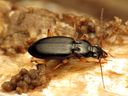
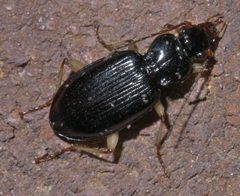
7Patrobus is a of ground beetles (Carabidae) comprising more than 20 described . The genus is distributed across the Palearctic and Nearctic regions. At least one species, Patrobus atrorufus, has been studied for its and seasonal activity patterns, showing flexibility in breeding timing in response to climatic conditions. Members of this genus have been recorded in agricultural studies as part of carabid sensitive to soil management practices.
Pronunciation
How to pronounce Patrobus: /ˈpætrəbəs/
These audio files are automatically generated. While they are not always 100% accurate, they are a good starting point.
Images
Habitat
Floodplain meadows; alder forest; spruce forest; subalpine birch forest. within this have been documented in agricultural settings including strip-tilled and conventionally tilled fields.
Distribution
Palearctic (including Europe) and Nearctic. Documented in Denmark, Norway, Sweden, and Vermont (USA).
Seasonality
Activity patterns vary by and location. Patrobus atrorufus exhibits bimodal activity with peaks in spring and autumn; breeding occurs in autumn at lower altitudes, shifting toward spring at higher altitudes.
Life Cycle
Patrobus atrorufus overwinters as . Some show with summer-autumn and larval , though this appears to vary by region and climate.
Behavior
Activity patterns differ between sexes and age classes. The appears sensitive to soil disturbance and tillage practices.
Ecological Role
Ground-dwelling predatory beetles; members of carabid that serve as bioindicators of environmental disturbance and farming practice impacts.
Human Relevance
Used as bioindicators in agricultural research to assess effects of tillage practices on beneficial insect . Strip tillage has been shown to better preserve compared to conventional tillage or plasticulture.
Similar Taxa
- HarpalusBoth are ground beetle in Carabidae found in agricultural ; distinguished by morphological features not specified in available sources.
- PoecilusBoth are carabid beetles used as bioindicators in farming practice studies; specific distinguishing characters not detailed in available sources.
More Details
Research note on life cycle variation
Conflicting reports exist for Patrobus atrorufus : one Russian study describes larval , while Norwegian research documents overwintering. This suggests plasticity in strategy.
Conservation relevance
Patrobus longicornus has been noted as relatively rare and sensitive to soil management techniques, indicating conservation value of reduced-tillage practices.
Sources and further reading
- BugGuide
- Wikipedia
- GBIF taxonomy match
- iNaturalist taxon
- NCBI Taxonomy
- Catalogue of Life
- Beneficial Beetle Diversity Blooms on Strip-Tilled Farms
- Differences in seasonal activity pattern and breeding time of Patrobus atrorufus (Carabidae) in central Norway
- THE LIFE CYCLE OF PATROBUS ATRORUFUS (STRÖM, 1768) (COLEOPTERA, CARABIDAE) IN THE SOUTH OF THE MESHCHERA LOWLAND