
Leistus
Frölich, 1799
Species Guides
3- Leistus ferrugineus(Palearctic rusty basket-throat)
- Leistus ferruginosus(Nearctic rusty basket-throat)
- Leistus longipennis(long-winged basket-throat)
Leistus is a of ground beetles (Carabidae) comprising over 250 described distributed across the Holarctic region. Species within this genus are predominantly associated with mountainous and alpine environments, with many exhibiting orophilic (mountain-dwelling) adaptations. The genus includes notable examples of high-altitude and glacial refugia survival, such as the rediscovered Leistus punctatissimus from the Dolomites.
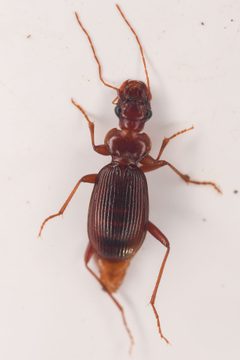
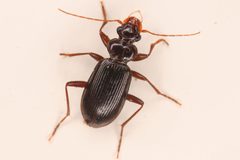
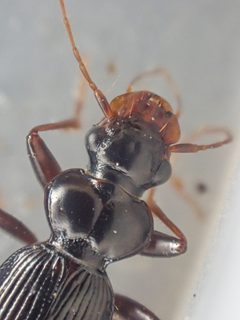
Pronunciation
How to pronounce Leistus: //ˈlaɪstəs//
These audio files are automatically generated. While they are not always 100% accurate, they are a good starting point.
Images
Habitat
of Leistus are predominantly associated with montane and subalpine elevation zones, including spruce forests, subalpine zones, and high-altitude alpine plateaus above the vegetation line. Specific documented include wet black alder forest, wet litter in alder-birch forest, mountain beech forest along streams, river banks, and areas with scarce patchy vegetation at high elevations. Some species occupy green alder shrub formations in successional habitats following abandonment of alpine farming.
Distribution
Holarctic distribution, encompassing the Palearctic and Nearctic regions. Documented from Europe including the Iberian Peninsula, Alps (France, Switzerland, Italy, Germany), Carpathians (Ukraine, Poland), and extending into Siberia and the Russian Far East (Khabarovsk Territory). Northern range edges occur in southern Germany (Baden-Württemberg) at elevations approaching 900 m a.s.l. High-altitude endemics occur in the Dolomites above 2600 m a.s.l.
Seasonality
activity varies by and elevation. Leistus nitidus adults become active relatively late in the year with in late spring and summer. Leistus terminatus young beetles have been observed in the second decade of May and third decade of June in subalpine zones. The larval stage serves as the stage in at least some species.
Life Cycle
occurs in late spring and summer in documented . The larval stage is the stage in Leistus nitidus. Mature have been documented in females collected in late June. Larval has been photographically documented for some species but remains undescribed for others.
Ecological Role
Some respond to vegetation , with Leistus nitidus potentially benefiting from expansion of green alder shrub formations in the Alps. High-altitude species form part of adapted to extreme alpine ecological factors above the vegetation line.
More Details
Glacial refugia and climate change
Leistus punctatissimus exemplifies survival in nunatak refugia during glacial periods, with post-glacial distribution shifts alternating between downhill and uphill range changes in response to climate change. This case demonstrates that type localities may not represent optimal search locations for supposedly extinct .
Taxonomic complexity
The contains multiple groups requiring careful delineation, including the Leistus angusticollis group with six orophilic species in the northern Iberian Peninsula, and the Leistus rufomarginatus and Leistus ovipennis groups. Leistus rufomarginatus is currently expanding its range while related species remain geographically restricted.
Genomic resources
The of Leistus spinibarbis has been sequenced, providing molecular resources for this .
Sources and further reading
- BugGuide
- Wikipedia
- GBIF taxonomy match
- iNaturalist taxon
- NCBI Taxonomy
- Catalogue of Life
- Le genre Leistus (Froehlig) (Coleoptera - Carabidae). I. Le groupe de Leistus angusticollis (Dejean)
- Grünglänzender Bartläufer (Leistus nitidus) Zu Lebensräumen und Phänologie der Art am nördlichen Arealrand
- Species rediscovery or lucky endemic? Looking for the supposed missing species Leistus punctatissimus through a biogeographer’s eye (Coleoptera, Carabidae)
- Species rediscovery or lucky endemic? Looking for the supposed missing species Leistus punctatissimus through a biogeographer’s eye (Coleoptera, Carabidae)
- Le genre Leistus Froehlig (Coleoptera Carabidae Nebriini). XIII -Les groupes de L. rufomarginatus Duftschmid et L. ovipennis Chaudoir
- Distribution and biotopic confinement of two ground beetle species of the genus Leistus Frölich, 1799 (Coleoptera: Carabidae) in the Urals
- SPATIAL DISTRIBUTION AND IMPLEMENTATION OF THE LIFE CYCLE OF GROUND BEETLE LEISTUS NIGER GEBLER, 1847 (COLEOPTERA: CARABIDAE) IN THE KOMSOMOLSKY NATURE RESERVE (KHABAROVSK TERRITORY, RUSSIA)
- Catalogue of Leistus terminatus (Panzer, 1793) (Coleoptera, Carabidae) deposited in the State Museum of Natural History NASU, Lviv, Ukraine
- The genome sequence of a ground beetle, Leistus spinibarbis (Fabricius, 1775).