
Loricera
Latreille, 1802
Species Guides
3- Loricera decempunctata(10-spotted springtail-hunter)
- Loricera foveata(pitted springtail-hunter)
- Loricera pilicornis(Hairy-horned Springtail-hunter)
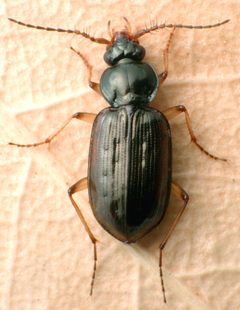
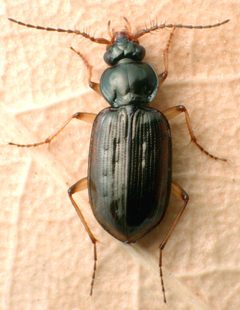
Loricera is a of ground beetles (Carabidae) comprising approximately 17 described . It is the sole genus of the Loricerinae. Members of this genus are distinguished by a remarkable morphological specialization: modified antennal setae that form a prey-capture apparatus for hunting Collembola (springtails). The genus has a Holarctic distribution, occurring in both the Palearctic and Nearctic regions.
Pronunciation
How to pronounce Loricera: //lɔˈriː.kɛ.ra//
These audio files are automatically generated. While they are not always 100% accurate, they are a good starting point.
Identification
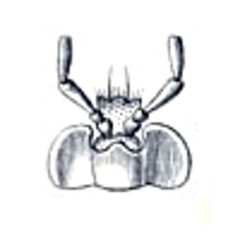
in this possess long, curved setae on the antennal segments that form a specialized prey-capture trap. These setae are extraordinarily strong—approximately 10 times more to bending than typical antennal setae—and are inserted in flexible sockets with the highest point positioned on the outer side of the trap. The setae interlock upon contact with prey to prevent escape.
Images
Distribution
Palearctic and Nearctic regions. Distribution records include Denmark, Norway, Sweden, and Vermont (United States).
Diet
Collembola (springtails). The antennal setal trap is specifically adapted to capture these fast-jumping prey items.
Behavior
Uses a specialized antennal setal trap to capture prey. When the contacts a , the setae interlock to prevent the prey's escape. The trap setae can bend up to 60–90° without damage during prey capture. Not all springtail are equally vulnerable: Heteromurus nitidus (Arthropleona) cannot generate sufficient kinetic energy to escape, while (Symphypleona) can bend the setae up to 109°, potentially opening the trap.
Ecological Role
of Collembola in soil and litter .
Similar Taxa
- Other Carabidae generaLoricera is distinguished from other ground beetles by the presence of the antennal setal trap; most Carabidae lack this specialized prey-capture apparatus and feed on a broader range of prey using conventional mandibular capture.
Sources and further reading
- BugGuide
- Wikipedia
- GBIF taxonomy match
- iNaturalist taxon
- NCBI Taxonomy
- Catalogue of Life
- The antennal setal trap of the Ground beetle Loricera pilicornis: a specialization for feeding on Collembola
- Reduction of sensory cells in antennal sensilla correlated with changes in feeding behavior in the beetle Loricera pilicornis (Insecta, Coleoptera, Carabidae)