
Pseudomorphini
false-form beetles
Genus Guides
1- Pseudomorpha(Western False-form Beetles)
Pseudomorphini is a tribe of ground beetles (Carabidae) distinguished by their evolutionary divergence from typical carabid body plans. Members are known for obligate associations with ants, living within colonies. The tribe includes the recently described Guyanemorpha spectabilis from French Guiana, which exhibits exceptional size and coloration compared to the generally dull-colored Western Hemisphere . Research on these beetles remains challenging due to their arboreal ant-nest .
Pronunciation
How to pronounce Pseudomorphini: /ˌsjuːdoʊˈmɔːrfɪnaɪ/
These audio files are automatically generated. While they are not always 100% accurate, they are a good starting point.
Identification
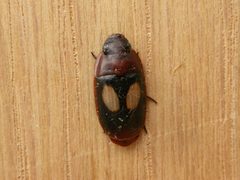
Most Western Hemisphere Pseudomorphini exhibit dull brown, dark reddish, or blackish coloration with minimal contrast on the upper surface. Guyanemorpha spectabilis is exceptional in its large size and vivid coloration. Species identification typically requires examination of morphological details; the tribe represents an evolutionary offshoot of normal carabid in both form and function.
Images
Habitat
Lowland tropical rainforest sites. associated with arboreal ants, particularly Azteca, requiring access to arboreal nests for larval development.
Distribution
Western Hemisphere, including French Guiana. Related in South America occur in association with arboreal ants.
Host Associations
- Azteca ants - obligate Larvae develop within nests; collected by insecticidal fogging, larvae only obtained by dissecting arboreal ant nests
Behavior
are known to co-exist with various . Conglobation (curling into a protective ball) has been observed in some related carabid groups but is not confirmed for Pseudomorphini specifically.
Similar Taxa
- Typical CarabidaePseudomorphini represent an evolutionary offshoot with divergent body form and function; unlike most ground beetles, they are obligate associates with modified
- Other myrmecophilous beetlesWhile many beetles associate with ants, Pseudomorphini are distinguished by their specific integration into arboreal nests and their unique morphological divergence within Carabidae
More Details
Research challenges
Study of Pseudomorphini is exceptionally difficult. can be collected through insecticidal fogging, but obtaining larvae requires physically tearing apart arboreal Azteca nests while suspended in trees—a method described as 'not for carabidologists faint of '
Taxonomic significance
Guyanemorpha spectabilis was described in 2013 as a remarkable new and , notable for contrasting sharply with the typically dull coloration of other Western Hemisphere pseudomorphines. The species was compared to the Olinguito in its surprising and distinctive characteristics.