
Paradromius
Fowler, 1887
Species Guides
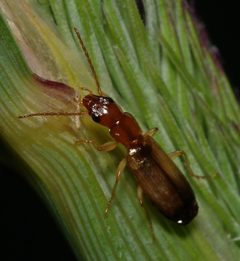
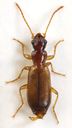
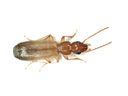
1Paradromius is a of ground beetles ( Carabidae) comprising more than 20 described . The genus was established by Fowler in 1887 and is classified within the Lebiinae, tribe Lebiini. Species occur across North Africa, the Palearctic, and the Middle East, with notable diversity on the Canary Islands and in Morocco.
Pronunciation
How to pronounce Paradromius: /ˌpærəˈdroʊmiəs/
These audio files are automatically generated. While they are not always 100% accurate, they are a good starting point.
Identification
Paradromius can be distinguished from related within the Dromiusina subtribe by genitalic characters and subtle differences in elytral microsculpture and setation patterns. Specific identification often requires examination of male genitalia. The genus is generally characterized by small to medium body size, , and moderately elongated body form typical of lebiine carabids.
Images
Habitat
occupy diverse terrestrial including coastal dunes, steppe, forest edges, and rocky substrates. Several Canary Island species are associated with laurel forest and pine forest zones. North African and Middle Eastern species occur in arid and semi-arid environments including desert margins.
Distribution
North Africa (Morocco, Algeria, Tunisia, Egypt, Western Sahara), the Palearctic (Europe, Central Asia), and the Middle East. The Canary Islands harbor exceptional diversity with 10 . European records include Denmark, Norway, and Sweden. Individual species show restricted ranges; for example, Paradromius linearis occurs across Europe and Asia, while P. amoenus is restricted to the Canary Islands.
Ecological Role
As members of Carabidae, are presumed predatory, contributing to regulation of small in their respective . Ground beetles in this size class typically function as in soil and litter .
Similar Taxa
- DromiusAlso in subtribe Dromiusina; Paradromius distinguished by genitalic and elytral setation patterns
- CalodromiusFormerly included now placed in Paradromius; separation based on structural characters of the genitalia
More Details
Taxonomic History
The was revised by Machado (1992), who described numerous new from the Canary Islands and clarified species boundaries. The subtribal placement in Dromiusina reflects ongoing refinement of lebiine classification.
Conservation Status
Island endemics, particularly the ten Canary Island , may be vulnerable due to restricted ranges and alteration, though no formal assessments are widely documented.