
Cymindis
Latreille, 1805
Species Guides
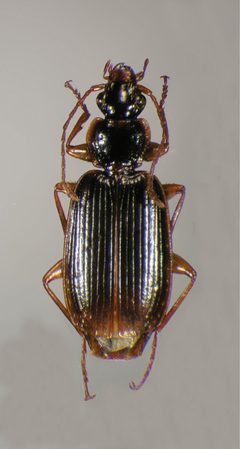
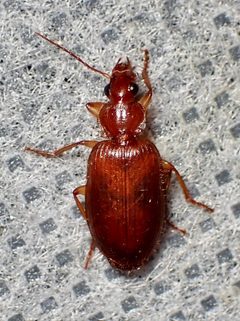
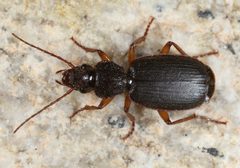
26Cymindis is a of ground beetles in the Carabidae, established by Latreille in 1805. The genus comprises over 50 described distributed across the Palearctic region, with particularly high diversity in Central Asia and the Near East. Many species are associated with arid and semi-arid . The genus is divided into numerous subgenera, reflecting substantial morphological and ecological variation among its constituent species.
Pronunciation
How to pronounce Cymindis: /sɪˈmɪndɪs/
These audio files are automatically generated. While they are not always 100% accurate, they are a good starting point.
Identification
Members of Cymindis can be distinguished from related ground beetle by the combination of: pronotum with distinct lateral margins; often with patterned or spotted coloration; and male genitalia with characteristic aedeagal structure. Specific identification requires examination of male genitalia and detailed comparison of pronotal and elytral patterns. The genus is most readily separated from superficially similar genera such as Dromius and Philorhizus by the structure of the and the arrangement of elytral punctures.
Images
Habitat
of Cymindis occupy diverse terrestrial including steppe, semi-desert, desert margins, rocky slopes, and riparian zones. Many species are found in sandy or gravelly substrates. Several subgenera show habitat specialization: subgenus Eremocymindis is restricted to desert environments, while subgenus Iscariotes is associated with saline soils and lake shores.
Distribution
Native to the Palearctic region, including Europe, North Africa, the Near East, and across Asia to Siberia, Mongolia, and China. The center of diversity lies in Central Asia (Kazakhstan, Uzbekistan, Kyrgyzstan, Tajikistan) and the Caucasus region. Some extend into the Russian Far East and northern China.
Seasonality
are primarily active during spring and summer months. Activity patterns vary by and latitude, with higher elevation and northern species showing shorter activity windows. Several species have been observed to be active in early spring, coinciding with snowmelt in montane .
Similar Taxa
- DromiusSimilar body form and elytral patterning, but distinguished by labral structure and elytral punctation
- PhilorhizusOverlapping size range and preferences, but Cymindis has more robust pronotal margins and different aedeagal structure
- LebiaRelated in same tribe, but typically with more elongate body form and different elytral microsculpture
More Details
Subgeneric classification
The contains 15 recognized subgenera, including Cymindis s.s., Arrhostus, Menas, Tarsostinus, and Eremocymindis. This extensive subgeneric structure reflects both morphological diversity and geographic partitioning of lineages.
Fossil record
Two fossil have been described: Cymindis aurora from the Miocene of Colorado and Cymindis extorpescens from the Miocene of Florissant, Colorado. These represent the only known fossil occurrences and suggest a formerly broader distribution.