
Ophonus
Dejean, 1821
Species Guides
2Ophonus is a of ground beetles in the Carabidae, established by Dejean in 1821. The genus is native to the Palearctic, Near East, Nearctic, and North Africa. Some , such as Ophonus ardosiacus, have been subjects of genomic studies, with a span of 911.9 megabases and 19 chromosomal pseudomolecules. The genus has been treated historically as a subgenus of Harpalus in some taxonomic treatments, as seen in the designation Harpalus (Ophonus) rufipes.
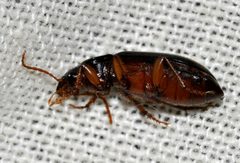

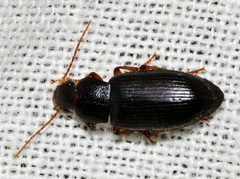
Pronunciation
How to pronounce Ophonus: /ˈɒfənəs/
These audio files are automatically generated. While they are not always 100% accurate, they are a good starting point.
Identification
within Ophonus are small to medium-sized ground beetles. Ophonus ardosiacus reach approximately 14 mm in length, with grooved varying from dark brown to black with a metallic blue sheen and reddish-brown appendages. The is distinguished from related by combinations of elytral striation patterns, body proportions, and male genitalia characteristics, though specific diagnostic features vary by species.
Images
Habitat
Open grassland and agricultural or coastal areas with chalky, limestone, or clay soils. Ophonus ardosiacus has been observed in such across its range.
Distribution
Palearctic (including Europe), Near East, Nearctic, and North Africa. Ophonus ardosiacus specifically ranges across central and southern Europe to Czechia, with rare records in the Netherlands and scattered occurrences in Britain (nationally scarce, category B).
Diet
At least some are phytophagous. Ophonus ardosiacus feeds on seeds of many plants, particularly carrot seed , with both larvae and consuming plant material.
Ecological Role
Useful in studies assessing in agricultural areas as part of . Some may serve as for gregarine (e.g., Clitellocephalus ophoni recorded from related ).
Human Relevance
Some , such as those related to the strawberry seed beetle Harpalus (Ophonus) rufipes, are agricultural pests of cultivated plants. Others are subjects of genomic research and biodiversity monitoring.
Similar Taxa
- HarpalusHistorically treated as congeneric; Ophonus has been classified as a subgenus of Harpalus in some taxonomic treatments, with such as Harpalus (Ophonus) rufipes demonstrating this relationship.
- StenolophusAnother of small ground beetles in tribe Harpalini with similar general habitus; distinguished by differences in pronotal shape and elytral microsculpture.
More Details
Genomic resources
The of Ophonus ardosiacus has been sequenced, comprising 911.9 megabases in span, scaffolded into 19 chromosomal pseudomolecules (18 and X ), with 40,995 protein-coding genes identified. The mitochondrial genome is 16.61 kb.
Sources and further reading
- BugGuide
- Wikipedia
- GBIF taxonomy match
- iNaturalist taxon
- NCBI Taxonomy
- Catalogue of Life
- Clitellocephalus ophoni (Tuzet et Ormières, 1956) (Apicomplexa: Eugregarinida: Gregarinidae) recorded in Poland on strawberry seed beetle Harpalus ( Ophonus ) rufipes (De Geer, 1774) (Coleoptera: Carabidae)
- The genome sequence of a ground beetle, Ophonus ardosiacus (Lutshnik, 1922).