
Ophonus rufibarbis
(Fabricius, 1792)
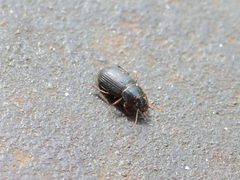
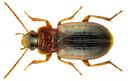
Ophonus rufibarbis is a ground beetle in the Carabidae. It is black with brownish legs and , measuring 6.0–9.5 mm in length. The is phytophagous and has a broad distribution across Europe and the Near East. It has been introduced to North America and is protected in Flanders, Belgium.

Pronunciation
How to pronounce Ophonus rufibarbis: /ˈo.fɔ.nus ˌru.fiˈbar.bis/
These audio files are automatically generated. While they are not always 100% accurate, they are a good starting point.
Identification
Distinguished from similar ground beetles by the combination of black body with distinctly brownish (not black) legs and . The specific epithet 'rufibarbis' (red-bearded) refers to the reddish-brown coloration of the appendages. Size range overlaps with many ; examination of genitalia may be required for definitive identification.
Images
Appearance
Black body with brownish legs and . Length 6.0–9.5 mm.
Habitat
Arable fields, draining soils, hedgerows, lakeshores, and woodlands.
Distribution
Native to Europe and the Near East. Recorded from Belgium (Brussels, Flanders, Wallonia), (former) Yugoslavia, Albania, Armenia, and Afghanistan. Introduced to North America (Canada).
Diet
Phytophagous
Human Relevance
Protected in Flanders, Belgium since September 22, 1980. Introduced to North America, where it is considered non-native.
Similar Taxa
- Other Ophonus speciesSimilar size and general form; distinguished by coloration of appendages and detailed examination of genitalia
More Details
Conservation status
Listed as protected in Flanders, Belgium as of September 22, 1980
Sources and further reading
- BugGuide
- Wikipedia
- GBIF taxonomy match
- iNaturalist taxon
- NCBI Taxonomy
- Surveys for the Red-barbed Ant in Scilly – new adventures in entomology! - Buglife Blog - Buglife
- Forget crawling to the “Ugly Bug Ball”, let’s talk slipping and sliding along to the Slug Disco! - Buglife Blog - Buglife
- Uncategorized | Blog - Part 54
- Death from above: parasite wasps filmed for the first time attacking ants from the air | Blog